
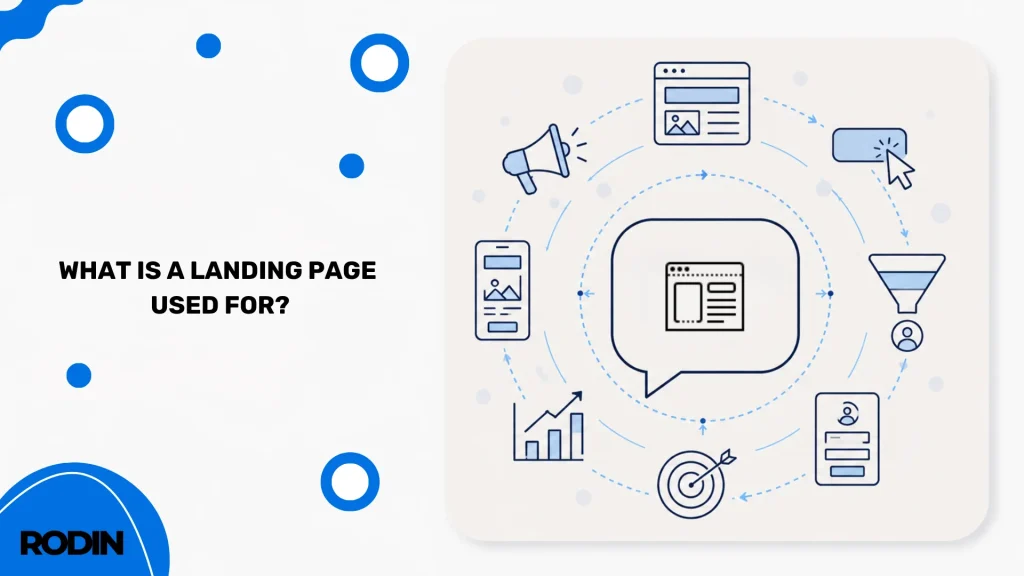
As I often say when working with clients, a landing page is not just another one of your web pages. It is where the decision happens.
Listen to this article in our Beyond Marketing podcast:
What is a landing page and why it exists?
A landing page is a standalone web page designed for one specific goal. Unlike other web pages, it does not try to do everything at once.
It is the page users land on after clicking:
- paid ads
- links in email campaigns
- results in search engines
- social media promotions
Because it is a standalone page, it removes noise and focuses entirely on conversion.
What is a landing page used for?
To answer directly, it is used to convert visitors into leads or customers.
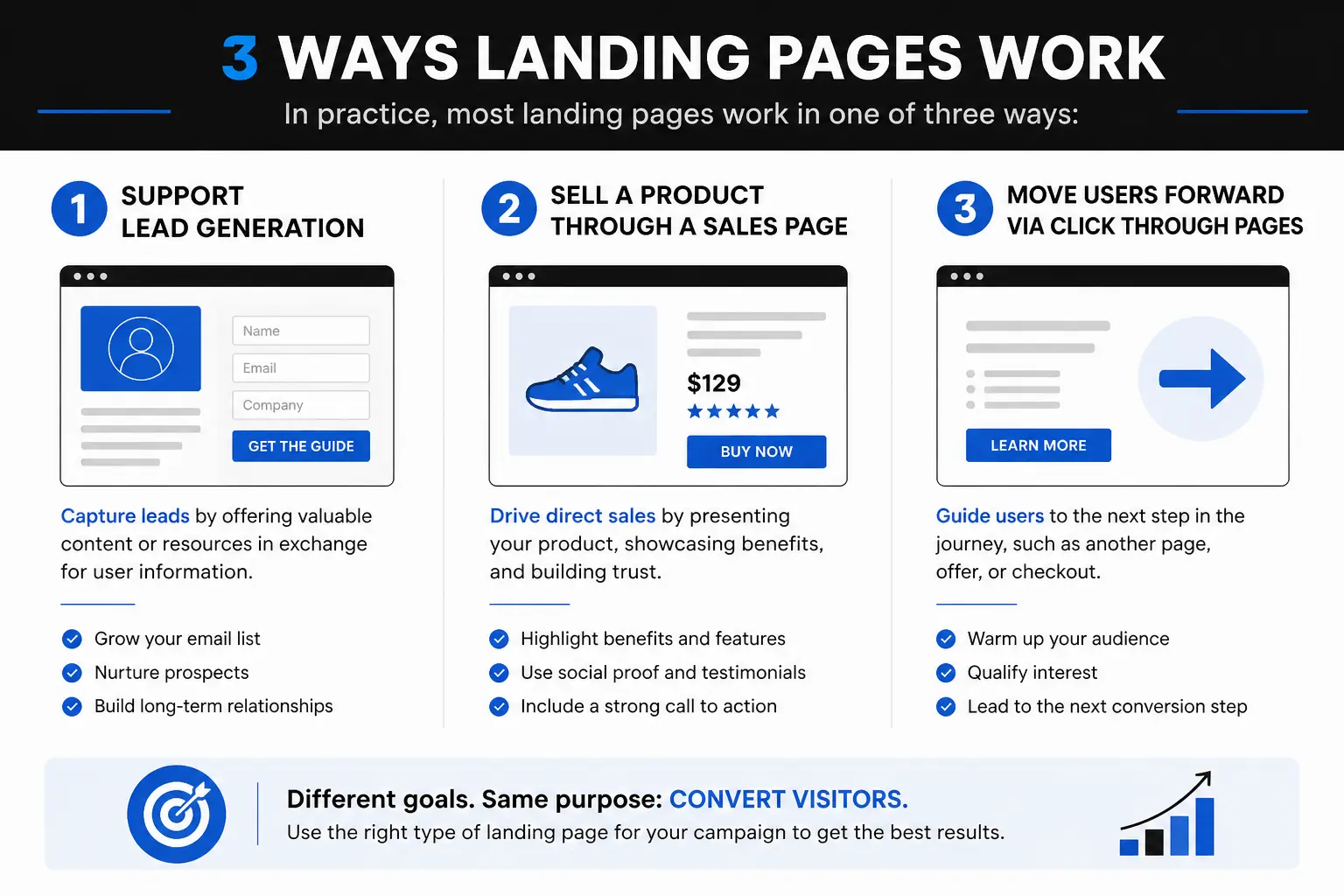
In practice, most landing pages work in one of three ways:
- support lead generation
- sell a product through a sales page
- move users forward via click through landing pages
Every effective marketing strategy depends on this step. Without it, your marketing campaigns lose efficiency.
Why I consider landing pages critical?
One of the biggest mistakes I see is sending traffic to generic web pages instead of a dedicated landing page.
If someone clicks on your ad, they already showed interest. Sending them to a homepage breaks that momentum.
A dedicated landing ensures:
- alignment with your advertising campaign
- better landing page experience
- higher conversion rate
Without that alignment, even strong paid ad campaigns will underperform.
Types of landing pages I use most often
Understanding the main types of landing pages helps you choose the right structure.
A. Lead generation landing pages
These are classic lead gen landing pages focused on lead generation.
Their purpose is simple. Capture leads.
They usually include:
- a form
- a clear offer
- a strong call to action (cta)
You will also hear them called lead capture pages or generation landing pages.
B. Click through landing pages
Click through landing pages are used to warm up the user before a purchase. They push users toward the next step rather than collecting data immediately.
C. Sales pages
A sales page is built to close the deal. It uses persuasive landing page copy, strong social proof, and a clear value proposition.
What makes a successful landing page?
From my perspective, every successful landing page relies on a few key elements.
1. A strong headline
A clear and compelling headline must match the ad. Ideally, the headline immediately grabs attention and confirms relevance.
2. Clear call to action
A clear call to action should be visible and repeated. Good call to action cta uses direct, action oriented language.
3. Social proof
I always emphasize social proof. Testimonials, numbers, and case studies reduce hesitation and help convert visitors.
4. Content that adds value
Your landing page content should expand on the ad. It should provide valuable content that answers real questions from your target audience.
How we approach creating landing pages?
When creating landing pages, we focus on simplicity and alignment.
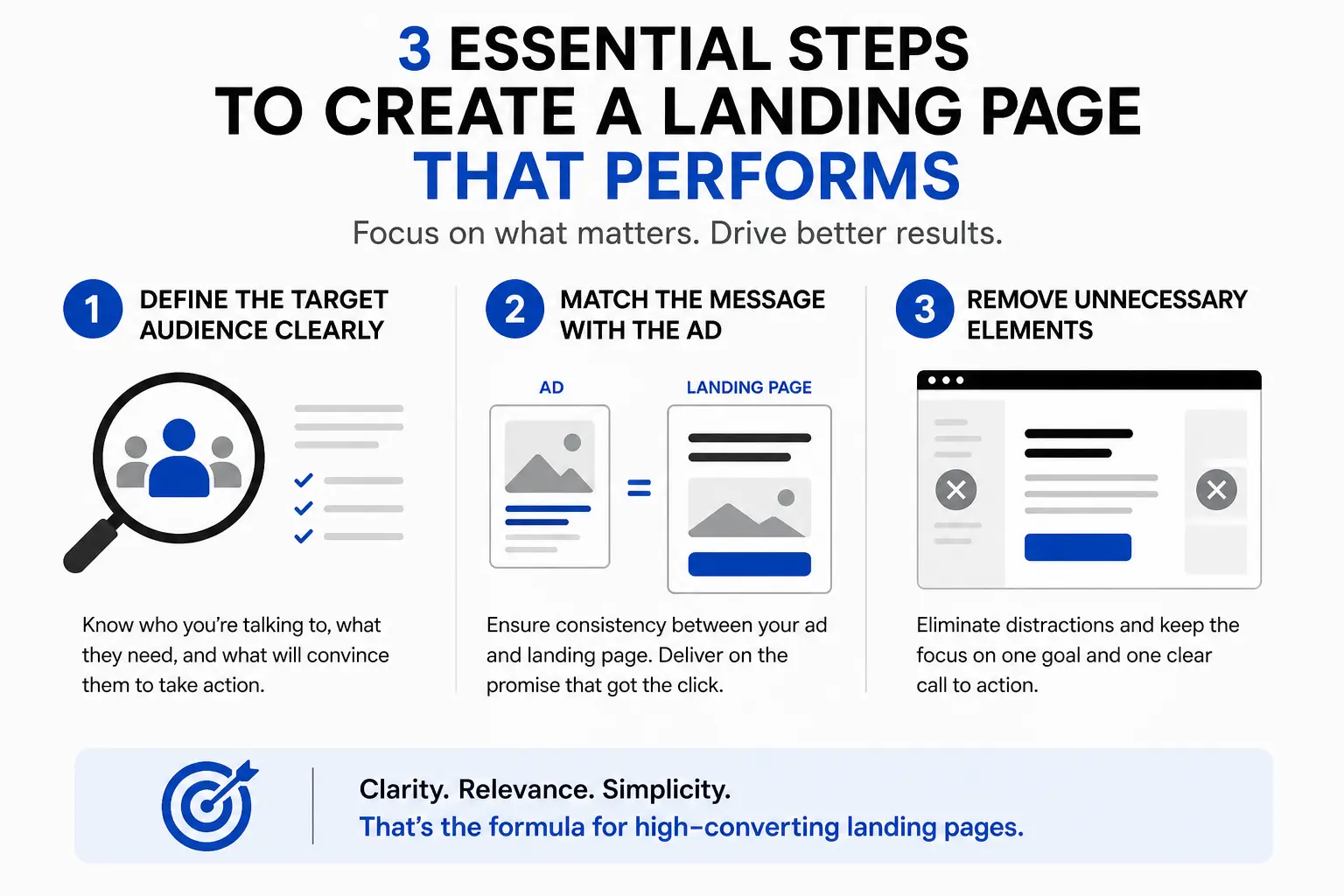
To create a landing page that performs:
- define the target audience clearly
- match the message with the ad
- remove unnecessary elements
A well designed landing page improves usability and drives a higher conversion rate.
Dedicated landing pages vs general pages
I strongly recommend using a dedicated landing page for each campaign.
That often means creating separate landing pages instead of relying on other web pages.
This approach allows:
- better targeting
- clearer messaging
- more precise testing
Over time, this leads to multiple landing pages that outperform generic solutions.
Landing pages and organic traffic
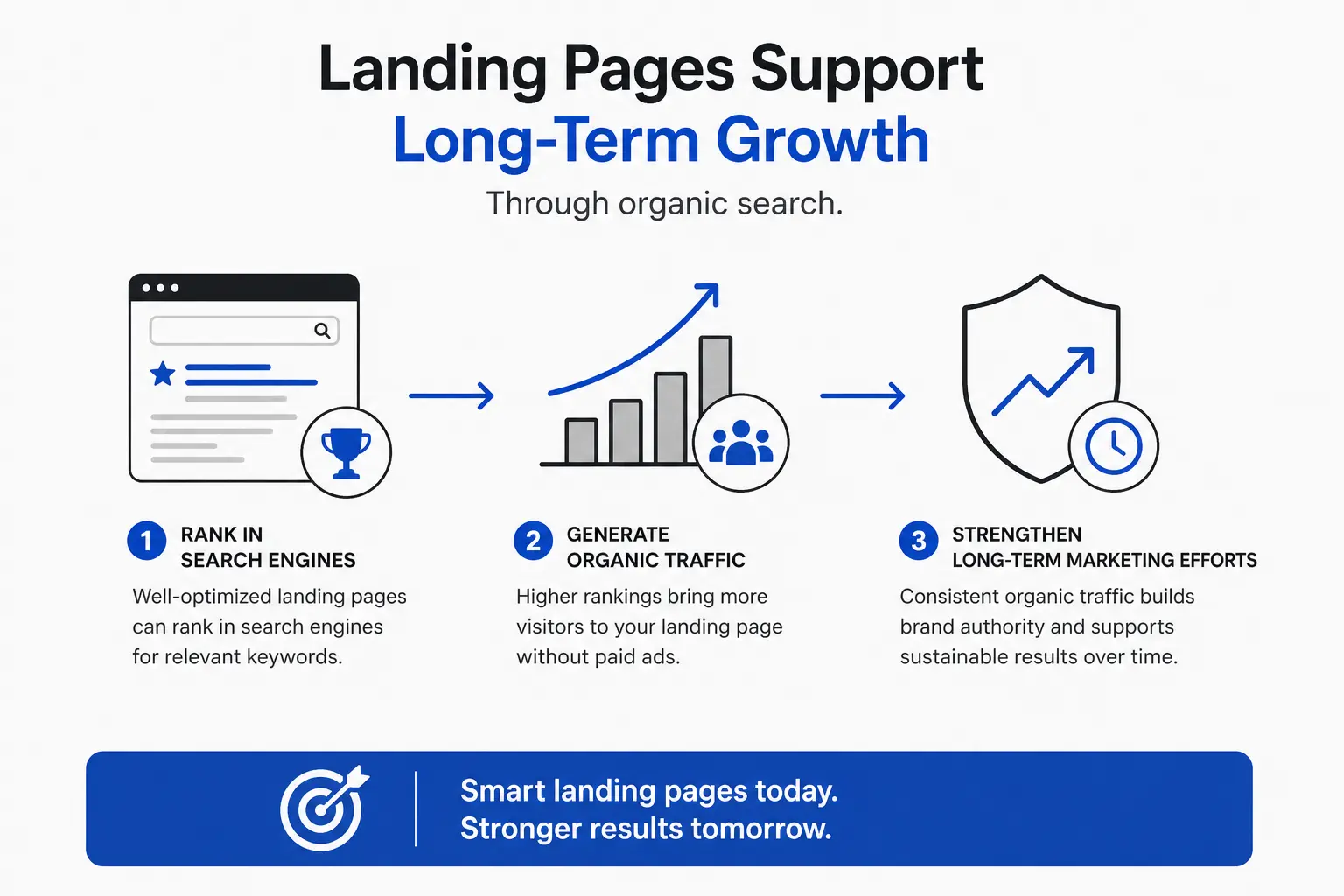
Although many people associate them with ads, landing pages also support organic search.
With proper search engine optimization, they can:
- rank in search engines
- generate organic traffic
- strengthen long-term marketing efforts
Well-built pages can effectively attract organic traffic without relying only on paid advertising.
How many landing pages do you actually need?
Clients often ask me how many landing pages they should create.
The answer is simple. More than one.
Different campaigns, audiences, and offers require separate landing pages. This is how you build high performing landing pages.
How to optimize landing pages effectively?
To optimize landing pages, I focus on continuous improvement.
Key areas include:
- simplifying forms for better lead generation
- testing variations to improve conversion rate
- refining messaging for prospective customers
A well optimized landing page can dramatically improve results without increasing traffic.
Tools for building landing pages
Using a reliable landing page builder simplifies the process.
A dedicated landing page builder allows teams to:
- quickly build landing pages
- test variations
- scale marketing efforts
This is especially important when managing multiple marketing campaigns.
Landing pages and paid advertising
In paid advertising, the destination page determines success.
If users land on irrelevant or generic web pages:
- they leave quickly
- conversion rate drops
- budget is wasted
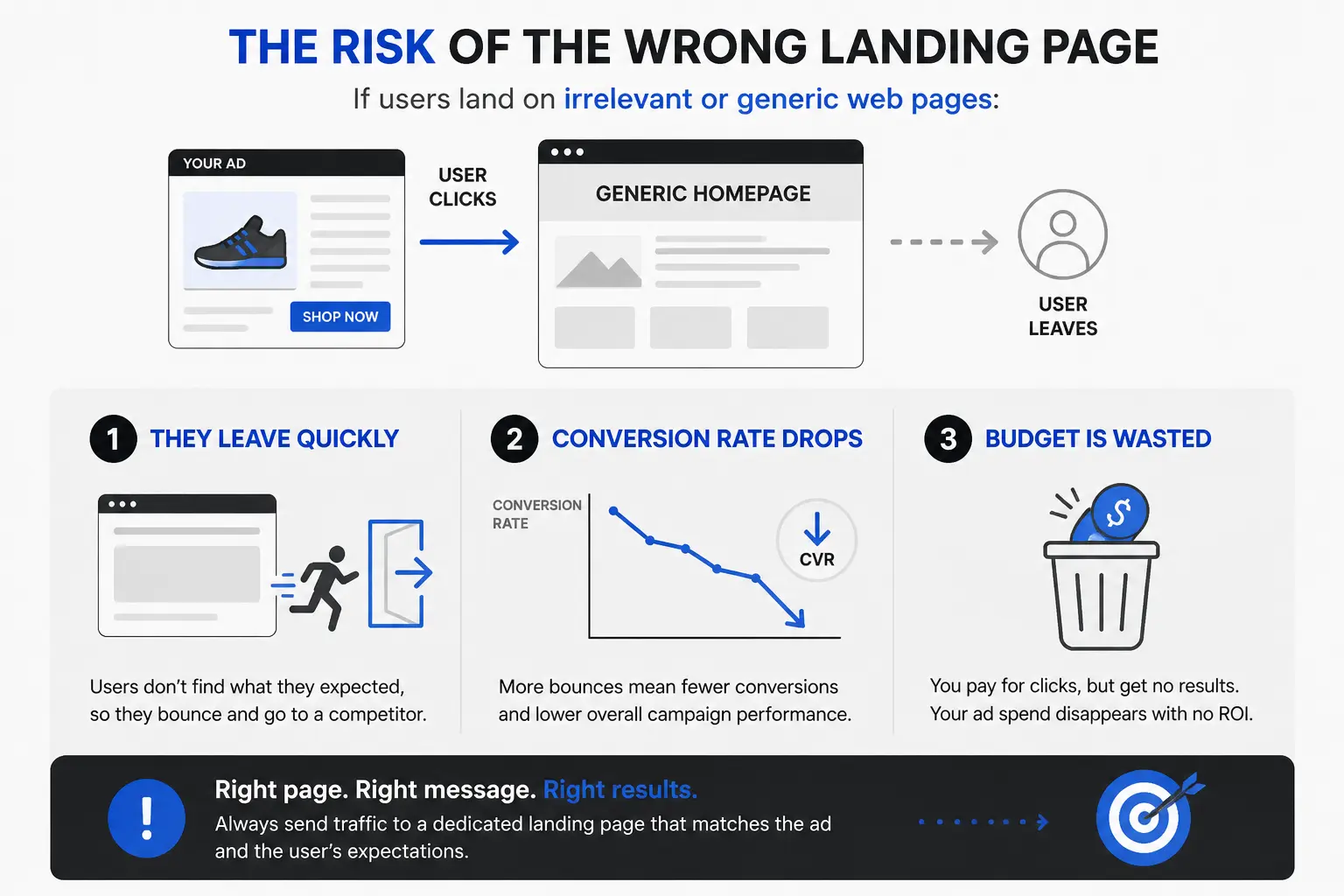
That is why every paid ad campaigns should direct traffic to a dedicated landing aligned with the message.
Why landing pages convert effectively?
Landing pages convert because they eliminate distractions and focus on one objective.
They guide users step by step, making it easier to take action. This is why effective landing pages are essential in any strong marketing strategy.