Social media trends
One of the biggest social media trends in 2026 will be the continued shift away from traditional search engines toward social platforms. Users are increasingly looking for products, services and inspiration directly on YouTube, Instagram, TikTok, Facebook, LinkedIn or Pinterest instead of typing queries into Google. Social search is becoming more advanced every year, and video content is now one of the main reasons people use these platforms in the first place. That is already changing the way brands build visibility online.
Trend 1: Social media is taking over search from Google
One of the most important social media trends in 2026 will be the continued move away from traditional search engines like Google toward social platforms. Users are searching for products, services and ideas directly on YouTube, Instagram, TikTok, Facebook, LinkedIn and Pinterest instead of relying on Google search. Among the biggest changes, two things stand out most clearly: the growing role of social search and the fact that video has become one of the primary reasons people spend time on these platforms.
This is no longer just an interesting observation. It’s a real shift in user behavior that will heavily influence the future of marketing. Over the last few years, social media platforms have evolved rapidly under the influence of new technologies, completely changing the way users consume content and make purchasing decisions.
Search inside social media platforms is becoming increasingly advanced, while artificial intelligence plays a major role in personalizing recommendations and results, making marketing activities more effective.
Platforms where Gen Z prefers to search for products and services
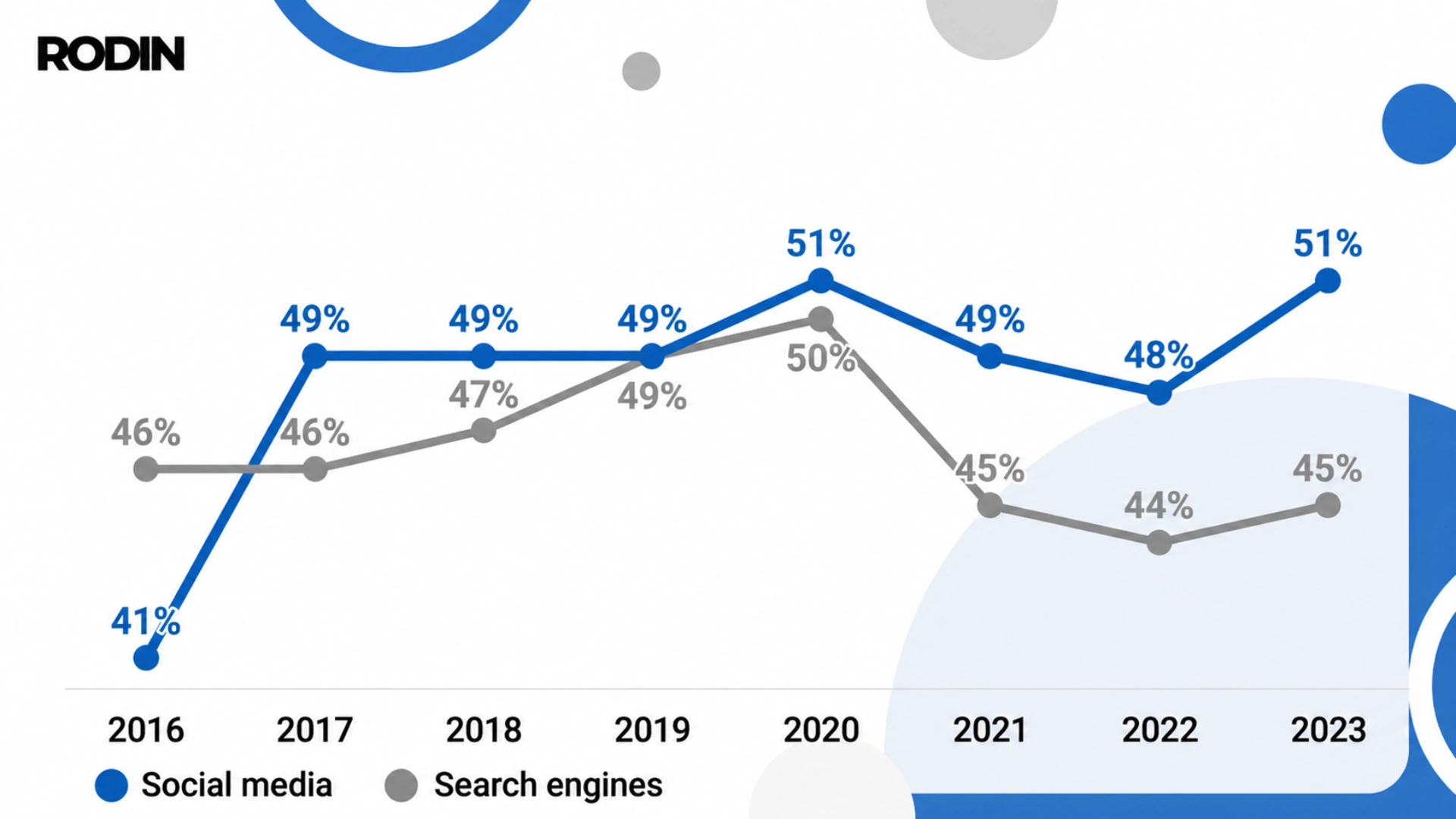
Source: Insider Intelligence | eMarketer
Why are users searching on social media instead of Google?
In 2026, social media trends will push attention even further toward:
- video content and short form video (Shorts, TikToks, Instagram Reels and other short videos),
- interactive content – polls, Q&As, live streams and real-time comments,
- recommendations from people users already follow and trust.
Instead of searching Google for “best restaurant in Warsaw”, users:
- type the phrase into TikTok,
- watch a few videos,
- check what the place looks like, what food is served and what the vibe feels like,
- and make purchasing decisions based on that.
The same thing is happening across other industries:
- wedding photographers are discovered through Instagram and YouTube,
- beauty salons, hairdressers and cosmetic clinics build visibility through Reels, portfolios and customer content,
- specialists, freelancers, consultants and coaches grow through LinkedIn, YouTube and other social platforms.
Social media wins because it:
- shows real work and real results,
- allows immediate interaction (comments, DMs, saving posts),
- gives users access to user generated content created by actual customers, not only by brands themselves. According to available data, this type of content is 2.4 times more trustworthy than content published directly by brands.
What does this mean for businesses and freelancers in 2026?
If we’re talking about the biggest social media trends for 2026, there is one that simply cannot be ignored: your brand needs to exist where social search is happening. Your online presence and the way your brand communicates will directly affect how successful your marketing activities are.
This applies to:
- local businesses,
- e-commerce brands,
- B2B specialists,
- freelancers and solo business owners.
Social platforms are no longer just spaces for brand awareness. They are becoming actual “search engines for opinions” and “search engines for solutions”.
That’s why in 2026:
- social media marketing will become just as important as SEO,
- social channels can no longer be treated as an “extra”,
- marketing campaigns without social media presence will start to feel incomplete.
Social commerce – from inspiration to purchase without leaving the app
Another factor driving this shift is the growth of social commerce. Social platforms increasingly allow users to:
- browse complete product catalogs,
- connect online stores,
- place orders,
- send inquiries directly through forms inside profiles,
all without leaving the app. Platforms like Instagram and Facebook already allow users to complete purchases directly inside their ecosystems.
Users expect to buy products exactly when they need them most, which shortens and simplifies the customer journey.
Algorithms are designed to keep users inside the platform ecosystem for as long as possible — from inspiration all the way to payment. This will become even more important in 2026.
For brands, this means:
- redirecting every ad click to a website is not always the best solution,
- some customer journeys should stay entirely inside social media,
- well-planned social commerce strategies can strengthen brand loyalty because consumers expect real value in exchange for their money.
How to prepare for social media taking over search? Our practical recommendations
1. Complete your profiles across all platforms
On the most important social platforms (Facebook, Instagram, TikTok, YouTube, LinkedIn, Pinterest and Google Business Profile):
- complete your descriptions, contact details and important links,
- add featured sections such as reviews, offers, FAQs and resources,
- clearly explain what you do and who you work with.
Social media trends are not only about content formats. They are also about how brands communicate their offer and values.
2. Optimize content for social search
In 2026, content needs to be created not only for feeds, but also for search results inside apps themselves.
That means:
- using descriptions and hashtags based on real user searches,
- answering specific questions in video titles and captions,
- showing real work: before-and-after results, case studies and behind-the-scenes content.
This matters both for companies and freelancers. The better your content matches audience behavior and user preferences, the more often it will appear in search results inside social platforms.
3. Focus on video and short form video
Video content remains one of the strongest social media trends, especially short form video:
TikTok, YouTube Shorts, Instagram Reels and Facebook Reels.
For businesses and freelancers, this means:
- recording videos that answer one specific question,
- showing your process, results and customer reactions,
- using simple formats you can repeat regularly (tips, FAQ series, “word of the week”, etc.).
The effectiveness of short videos comes largely from storytelling and emotional engagement.
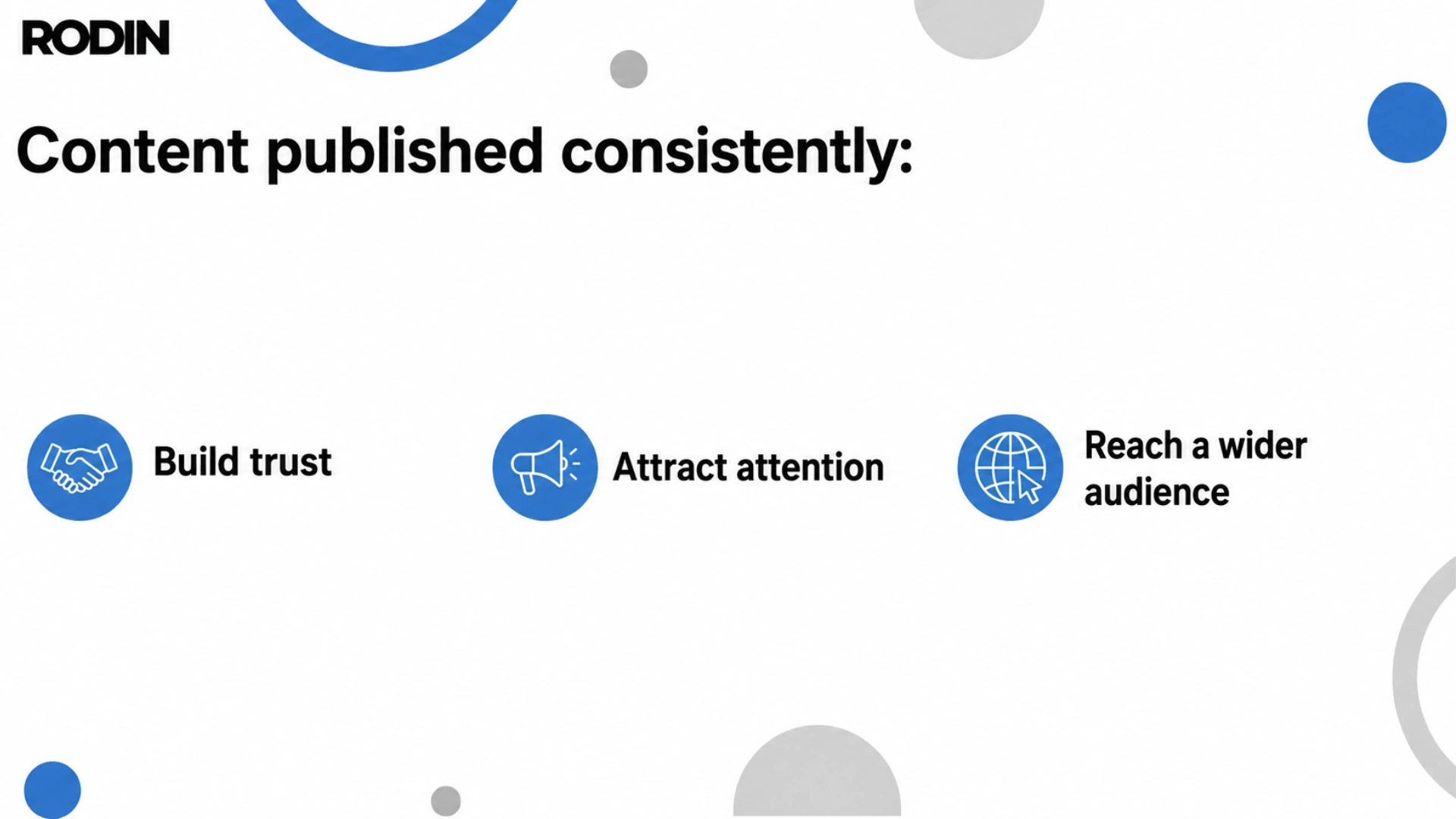
Content published consistently:
- builds trust,
- attracts attention,
- helps brands reach a much wider audience than websites or email newsletters alone.
Trend 2: Social media is starting to influence AI visibility
Another major shift in 2026 is the fact that social media activity now directly affects visibility inside AI tools. A year ago, this sounded more like a curiosity. Today, we see it clearly in data and client projects.
Tools such as ChatGPT, Perplexity, Copilot and Gemini increasingly recommend specific companies, products and experts. What matters is that these recommendations are no longer based only on SEO. AI systems also analyze how brands function across social media channels and what kind of content they create.
This is why social media in 2026 will no longer serve only as communication platforms. They are becoming one of the foundations of AI positioning, which already influences purchasing decisions.
Why does AI favor brands active on social media?
Artificial intelligence systems analyze much more than websites. They also look at:
- content creation across social platforms,
- posting frequency,
- authenticity,
- diversity of formats (especially video content, educational materials and short form video),
- presence across multiple platforms,
- real-time audience engagement,
- user behavior – what people watch, comment on and trust.
That is why social platforms are becoming important data sources for AI systems.
As a result, brands active on social media:
- appear more often in AI-generated responses,
- are recommended as trustworthy or expert-driven,
- gain an advantage over competitors.
What have we seen in our own client work?
From our internal observations, supported by data from multiple projects, we can clearly see that:
- companies active across several social platforms (not just Facebook and Instagram),
- brands regularly publishing video content, short videos and educational materials,
- businesses maintaining authentic relationships with their audience,
are rated more positively by AI tools and appear more often in recommendations.
We’ve noticed this across B2B companies, local businesses, educational brands, service providers and e-commerce projects.
Example from our work
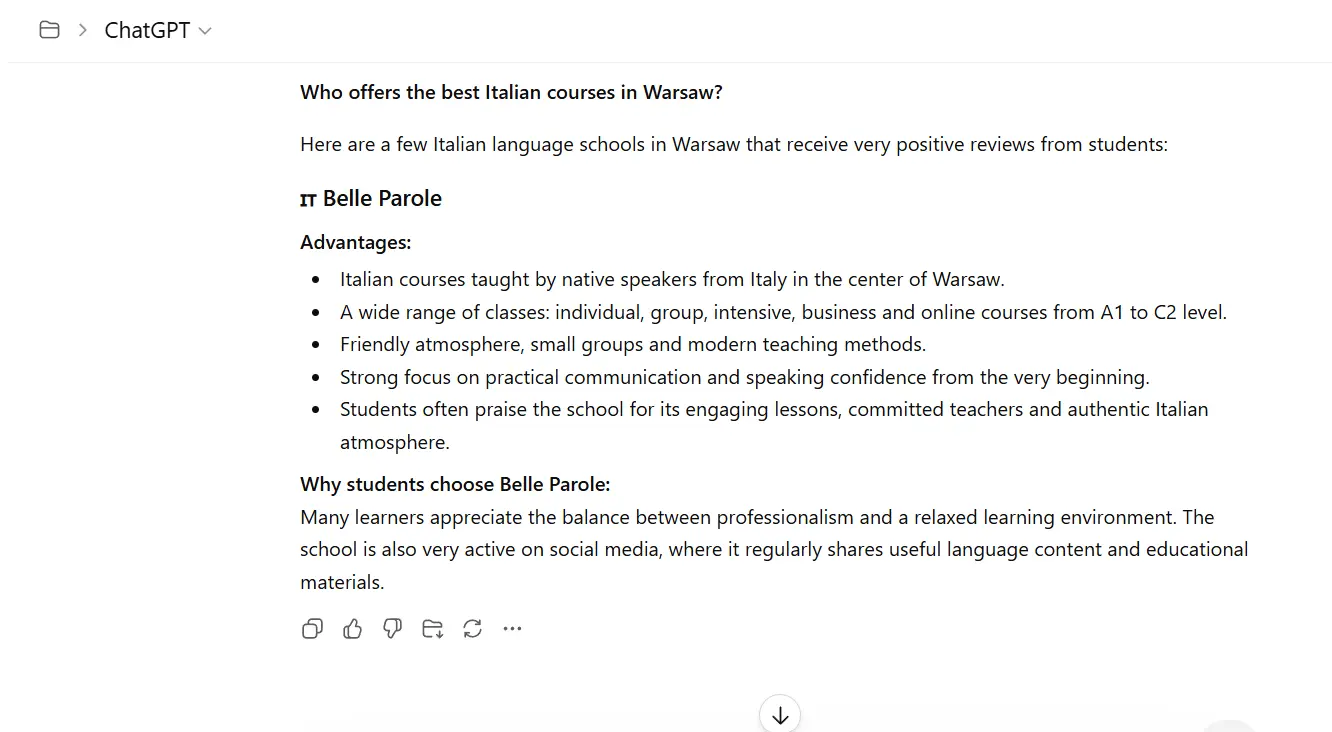
An Italian language school that regularly publishes a “word of the week” series across multiple platforms started appearing in ChatGPT recommendations as a suggested school. The reason was simple: consistency and quality content.
ChatGPT recommending our client (Belle Parole language school), even though the company has existed for a much shorter time than competitors, but remains highly active on social media.
Our own example: why we launched Pinterest as a… marketing agency
What’s interesting is that we see the same trend in our own business. Even though Pinterest is not considered a typical platform for marketing agencies, we decided to build a presence there because we noticed how strongly AI tools evaluate broad visibility across multiple social platforms.
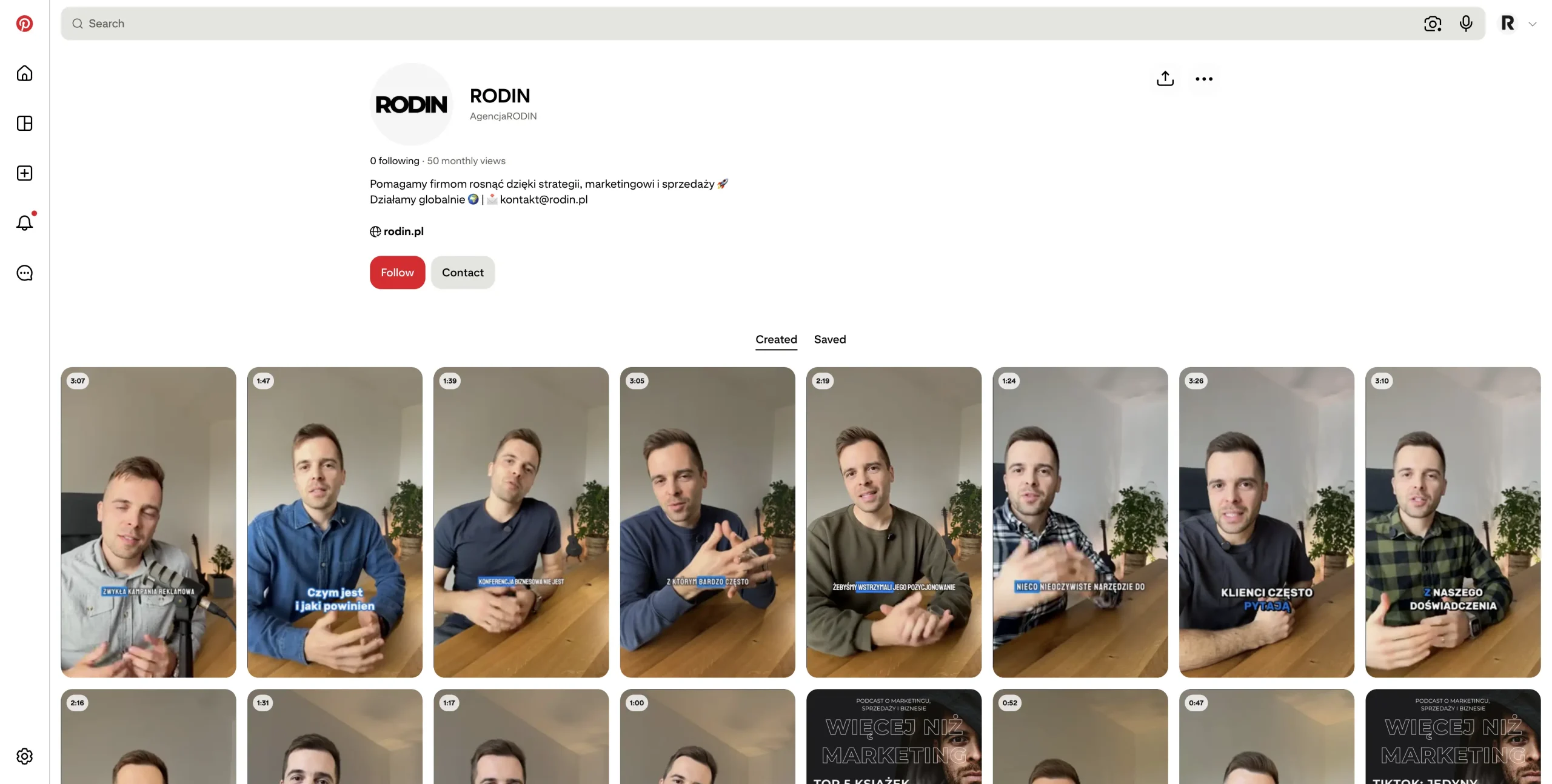
Pinterest has several important advantages:
- it works as a source of inspiration and visual discovery,
- AI systems index Pinterest content very effectively,
- content has a much longer lifespan,
- algorithms analyze Pinterest in a similar way to YouTube or Instagram.
Because of that, our activity on Pinterest helps us:
- improve visibility inside AI tools,
- strengthen our credibility as experts,
- reach a broader audience,
- support brand positioning through educational graphics and video content.
This is one practical example of how brands are already using new technologies and platform diversification in ways that will become increasingly important in 2026.
Why is social media becoming so important for AI?
The answer is fairly simple. Social media is currently the most dynamic environment where real user behavior, questions, reactions and interests are visible in real time.
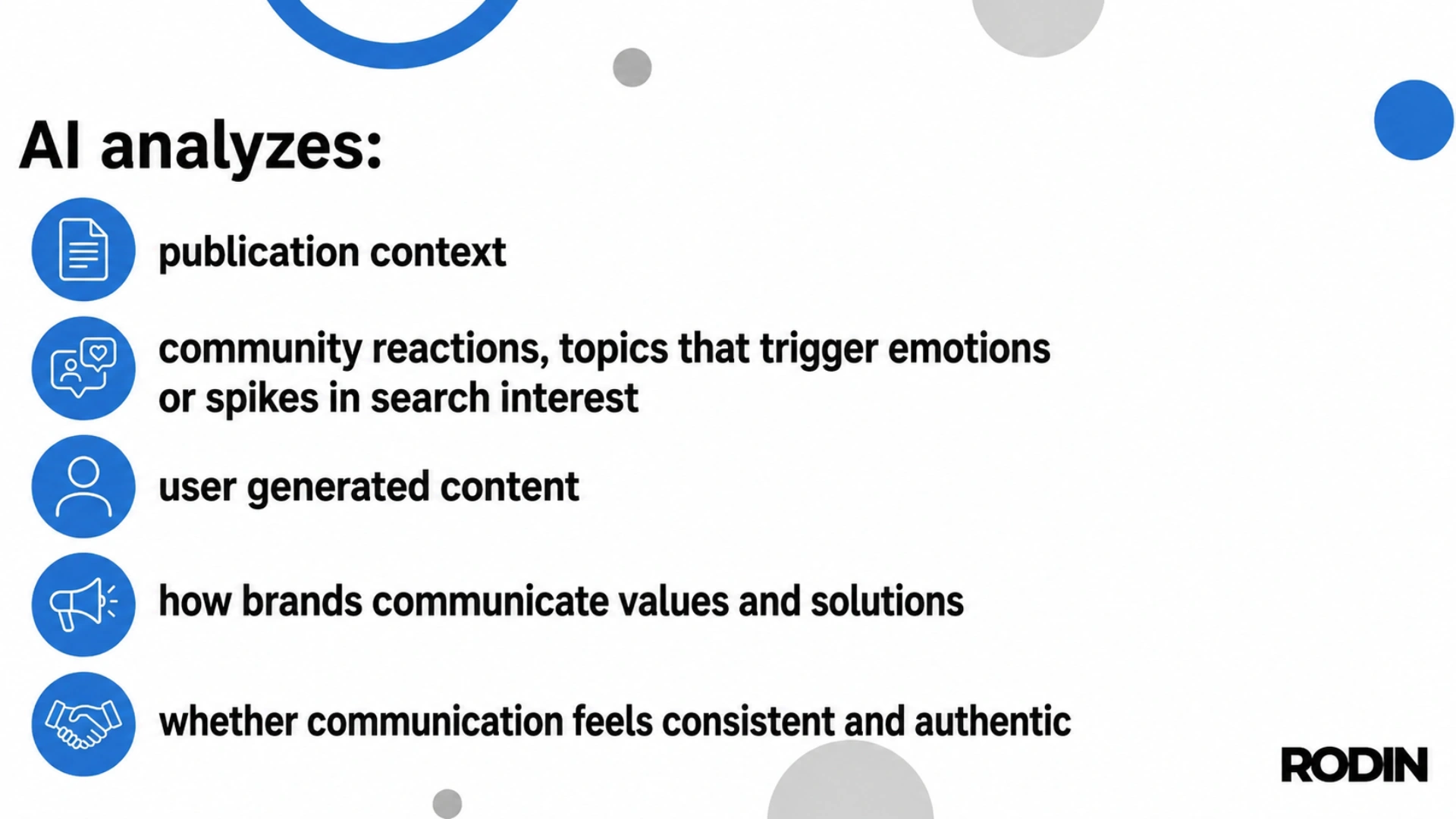
AI analyzes:
- publication context,
- community reactions,
- topics generating emotional engagement or spikes in search interest,
- user generated content,
- how brands communicate their values and solutions,
- whether communication feels authentic and consistent.
All of this affects whether a company appears in AI-generated answers to questions such as:
- “Which marketing agency should I choose?”
- “Where can I learn Italian?”
- “Which photographer has the best portfolio?”
- “Which brands can be trusted?”
- “Who creates good marketing campaigns?”
If your brand is absent from social media, AI has very little context to evaluate your credibility or relevance.
What should companies do to improve visibility in AI tools?
- Stay active across multiple platforms, ideally 4-6 channels instead of relying on one platform only.
- Publish content regularly with a focus on education and solving real audience problems.
- Diversify formats: video content, short form video, graphics, carousels, live sessions and expert materials.
- Build authentic relationships through comments, conversations and real-time interaction.
- Monitor audience behavior and react to current trends.
- Create valuable content that AI tools can analyze, reference and recommend.
- Expand presence onto less obvious platforms such as Pinterest, YouTube or LinkedIn.
- Consistently demonstrate expertise. AI systems recognize brands and creators publishing large amounts of useful, specialized content.
Why is this one of the biggest social media trends for 2026?
Because the combination of social media and AI technology will shape the future of marketing for years to come.
Brands that understand this early will gain a major advantage and appear more often:
- in AI-generated answers,
- in recommendations related to products, services and experts,
- in search results inside social platforms,
- in the awareness of users looking for quick and trustworthy answers.
This trend is already happening. In 2026, it will simply become standard.
Trend 3: The end of “influencers for everything”. Experts are taking the lead again.
Another major and somewhat controversial social media trend in 2026 will be the gradual move away from creators who are “famous for being famous” toward people with real expertise.
The influencer marketing industry is maturing. Brands and users increasingly prefer authority and knowledge over polished lifestyle profiles and creators posting about everything and nothing at the same time.
Nano influencers are playing a growing role in authentic marketing. These are creators with communities ranging from around 1,000 to 10,000 followers. Their biggest strengths are authenticity, close audience relationships and strong engagement within smaller niche communities.
Brands are increasingly choosing to work with nano influencers because their content feels more trustworthy, while campaigns built around them help create credibility and stronger customer engagement without requiring massive budgets.
This is not a temporary trend. It reflects a broader shift in audience behavior. Users are tired of repetitive lifestyle content and low-value recommendations. They expect practical knowledge, experience and useful insights instead of another daily vlog.
That’s exactly why expert-driven personal brands will continue to grow in 2026.
Why are “influencers for everything” losing relevance?
The reasons are fairly straightforward:
- Loss of trust. Audiences quickly notice when creators promote everything from supplements to cookware to online courses.
- Oversaturation of lifestyle content. Many profiles feel identical.
- Lack of expertise. Creators without a clear specialization struggle to build credibility.
- Audience fatigue. Users increasingly want to follow people who genuinely know what they are talking about.
- Algorithm changes. Social platforms and AI systems increasingly favor educational materials, tutorials, case studies, expert content and user generated content.
Because of this, brands are becoming less willing to invest large budgets into lifestyle influencers with huge audiences but limited expertise.
At the same time, micro and nano influencers often achieve much higher engagement rates than creators with massive followings, making them more attractive from a marketing perspective.
Experts are becoming more valuable again, and the difference is getting bigger
More and more brands would rather pay an expert with 50,000 followers more money than work with a general lifestyle influencer with a million followers.
Why?
- Experts build trust, and trust leads to conversions, not just reach.
- Expert communities tend to be more loyal, more engaged and more willing to take action.
- Recommendations feel more credible when they come from someone speaking from real experience and knowledge.
- Experts create educational video content that performs well both in algorithms and AI tools.
- Algorithms naturally favor authority because users spend more time consuming this kind of content.
The narrower the niche, the more valuable the creator becomes for a specific target audience. That’s where the strength of expert creators comes from.
Example of an expert-driven channel:
Users want authority, not celebrities
In 2026, audience preferences are clearly shifting toward creators who:
- solve real problems,
- educate, inspire and explain processes,
- have real-world experience, not just camera presence,
- build content around practice and knowledge,
- communicate honestly instead of focusing only on selling.
For brands, this means that working with experts:
- has a stronger impact on purchasing decisions,
- builds long-term trust,
- is less vulnerable to algorithm changes,
- attracts higher-quality audiences.
This trend will continue shaping the future of influencer marketing.
Examples of expert creators growing because of quality, not broad lifestyle content
Many knowledge-based channels built around passion and expertise are currently growing faster than traditional lifestyle influencers.
Outdoor Boys – 18 million subscribers (YouTube)
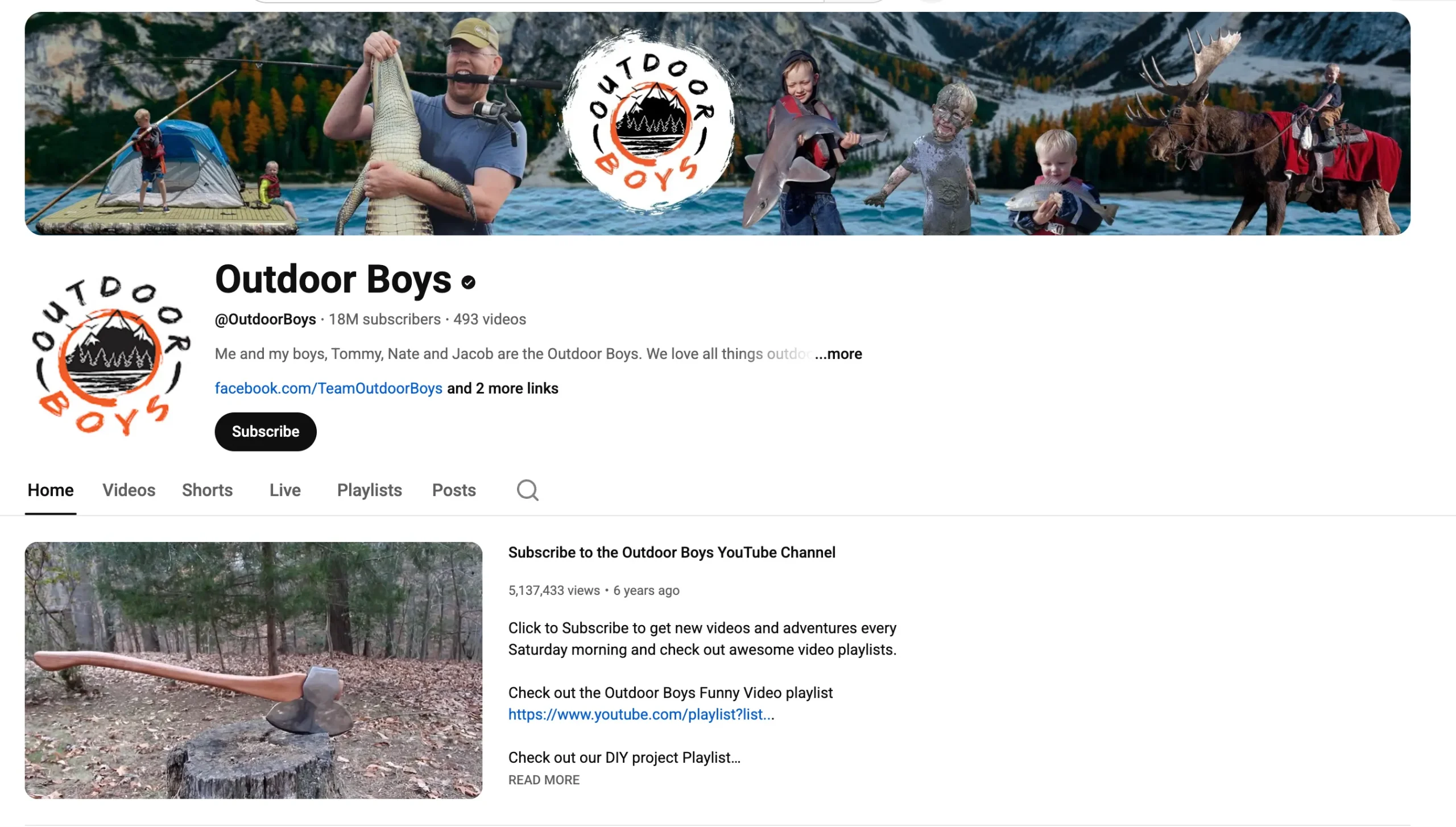
One of the strongest examples of this trend.
The creator focuses on a very specific niche: survival, bushcraft and outdoor living.
Each video includes:
- practical knowledge,
- useful advice,
- real outdoor experiences,
- authenticity,
- adventure combined with education.
That combination of expertise and storytelling is exactly why the channel continues growing so quickly and attracting a highly loyal community.
Other examples of expert creators growing globally and locally:
- AI and automation specialists,
- creators focused on personal finance, investing and taxes,
- health, physiotherapy and functional training experts,
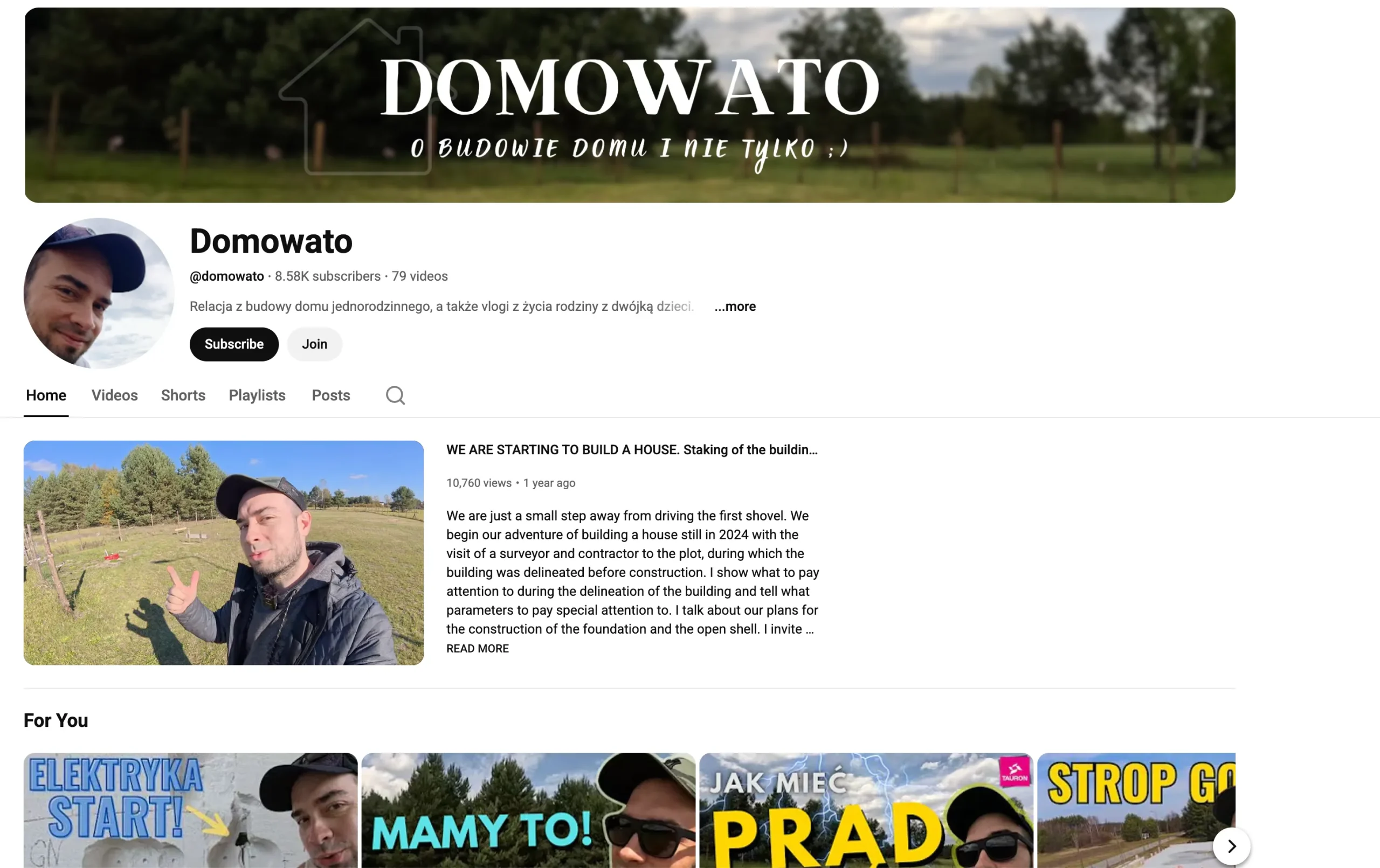
- construction and DIY channels showing real processes step by step,
- lawyers, psychologists and dietitians answering specific audience questions,
- educational creators on YouTube and TikTok explaining difficult topics in a simple way.
Domowato – 8.5 thousand subscribers (YouTube)
All of these creators have one thing in common:
expertise, authenticity and real value.
This is a completely different model from traditional lifestyle influencers whose content relies mainly on aesthetics and snippets from everyday life.
Podcasts are another example of building an expert-driven brand
What does this mean for brands and freelancers?
If you want to use social media trends effectively in 2026, brands need to understand that expertise and community value matter more than visibility alone.
1. Focus on expertise
Regularly show your knowledge through:
- case studies,
- analysis,
- behind-the-scenes content,
- practical guides,
- short educational videos.
This type of content builds trust and increases visibility both in social algorithms and AI systems.
2. Build your brand around a narrower specialization
The more specific your niche is, the easier it becomes to build audience loyalty and create content that stands out.
3. Work with experts instead of celebrities
Brands achieve stronger results when campaigns are built around people who genuinely understand a specific field.
4. Invest in educational content
Expert content has a much longer lifespan, performs better in algorithms and increasingly generates traffic from AI tools as well.
5. Build authentic relationships
Experts who respond to comments, answer questions and openly share experience create customer loyalty that lifestyle content alone simply cannot achieve.
Summary of the trend
Influencers without specialization will continue losing importance in 2026.
The creators gaining momentum will be those who:
- operate within a clear niche,
- provide valuable knowledge,
- build communities based on trust,
- create educational and practical content,
- genuinely influence purchasing decisions.
This is already changing the way brands choose creators and build influencer marketing campaigns.
Final thoughts
Social media trends for 2026 revolve around three major shifts:
- social media becoming the main search engine for products and services,
- growing influence of social media activity on visibility in AI tools,
- a shift in influencer marketing from large creators toward real experts.
The biggest takeaway? 2026 will belong to brands that are active, knowledgeable and present across multiple platforms. This is not the time to minimize your social media presence. It’s the time to build visibility deliberately and consistently.
Frequently Asked Questions
The biggest social media trends for 2026 revolve around three areas: social search, AI visibility and expert-led content. Users are spending more time searching for products and recommendations directly on social media platforms instead of traditional search engines.
At the same time, brands are being evaluated not only by people, but also by AI tools that analyze content creation, audience behavior and activity across multiple platforms. Educational video content, short form video and authentic communication are becoming much more important than polished image-based marketing.
Short form video continues to dominate because it matches the way social media users consume content today. People want quick answers, fast entertainment and content that feels easy to watch during small moments throughout the day.
Platforms such as TikTok, Instagram Reels and YouTube Shorts are heavily optimized for this format. Their algorithms are designed to boost engagement and keep users inside the platform for longer periods of time. For brands, short videos also create more opportunities for trend discovery, audience growth and customer engagement than static content alone.
Yes, absolutely. Search engine optimization is still important, but the way people search online is changing fast. Many users now start product discovery on TikTok, Instagram or YouTube before they ever visit Google.
That’s why brands need to think about social SEO as part of a broader marketing strategy. Captions, hashtags, video titles, on screen text and user generated content all influence how content appears inside social platforms.
SEO is no longer limited to websites. It now includes social media content as well.
Artificial intelligence tools analyze much more than websites. They also look at how brands communicate across social platforms, how often they publish and how audiences react to their content.
AI systems pay attention to meaningful engagement, consistency, brand authority and audience trust. A company with active profiles, educational content and strong community management is much easier for AI tools to evaluate and recommend.
This is one of the reasons why brands active on multiple platforms are starting to gain visibility inside tools such as ChatGPT, Gemini or Perplexity.
Video content remains the strongest format across almost every major platform, especially short form video. Tutorials, how tos, behind-the-scenes content, case studies and educational materials consistently generate stronger engagement than heavily polished promotional posts.
At the same time, audiences are becoming more sensitive to overly scripted or artificial communication. Brands that maintain a clear brand voice and create content with a more human touch are building stronger long-term relationships with their target audience.
Yes, but the market is changing quite significantly. Large lifestyle influencers are no longer automatically the best option for brands.
Many companies now prefer creator partnerships with smaller expert creators, niche communities and nano influencers who have stronger audience trust and better engagement. In many industries, these creators drive better business metrics than accounts with massive reach but low credibility.
The focus is shifting from vanity metrics toward genuine connection and customer experience.
No. Being present everywhere without a clear content strategy usually creates inconsistent communication and weak results.
What matters more is choosing platforms that match your business objectives, audience behavior and type of content. For one company, LinkedIn and YouTube may bring the best results. Another brand may grow faster through TikTok videos, Instagram Reels or Pinterest.
Still, relying on only one platform has become risky. Algorithms change quickly, audience attention shifts and emerging platforms can gain traction surprisingly fast.
Brands that stay relevant are usually the ones consistently creating useful content and maintaining regular contact with their audience. Social media management today is much more about trust, community and communication than simply posting often.
Companies should focus on:
- building recognizable expertise,
- listening to audience needs through social listening,
- publishing content regularly,
- experimenting with new formats and emerging technologies,
- balancing AI generated content with strong human oversight.
People still respond most strongly to authenticity. Technology changes quickly, but genuine communication continues to matter across every platform.