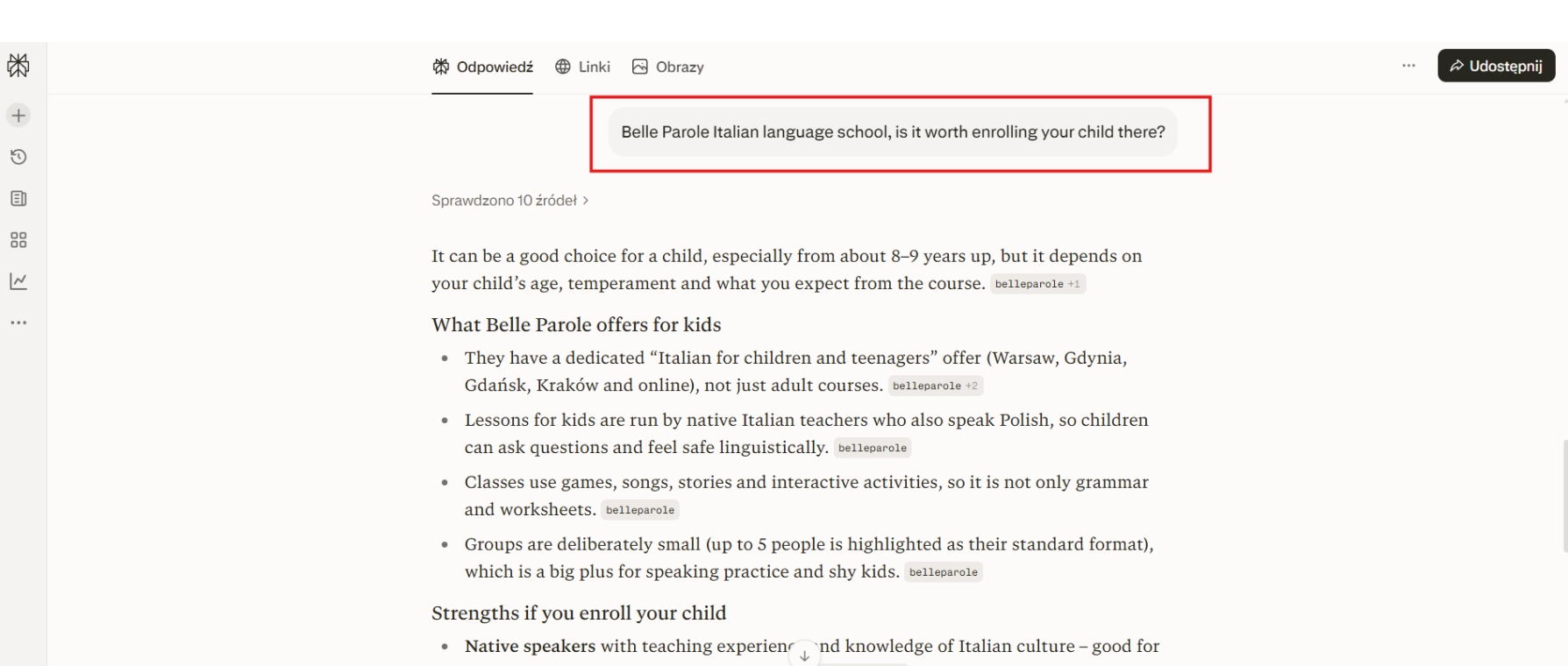
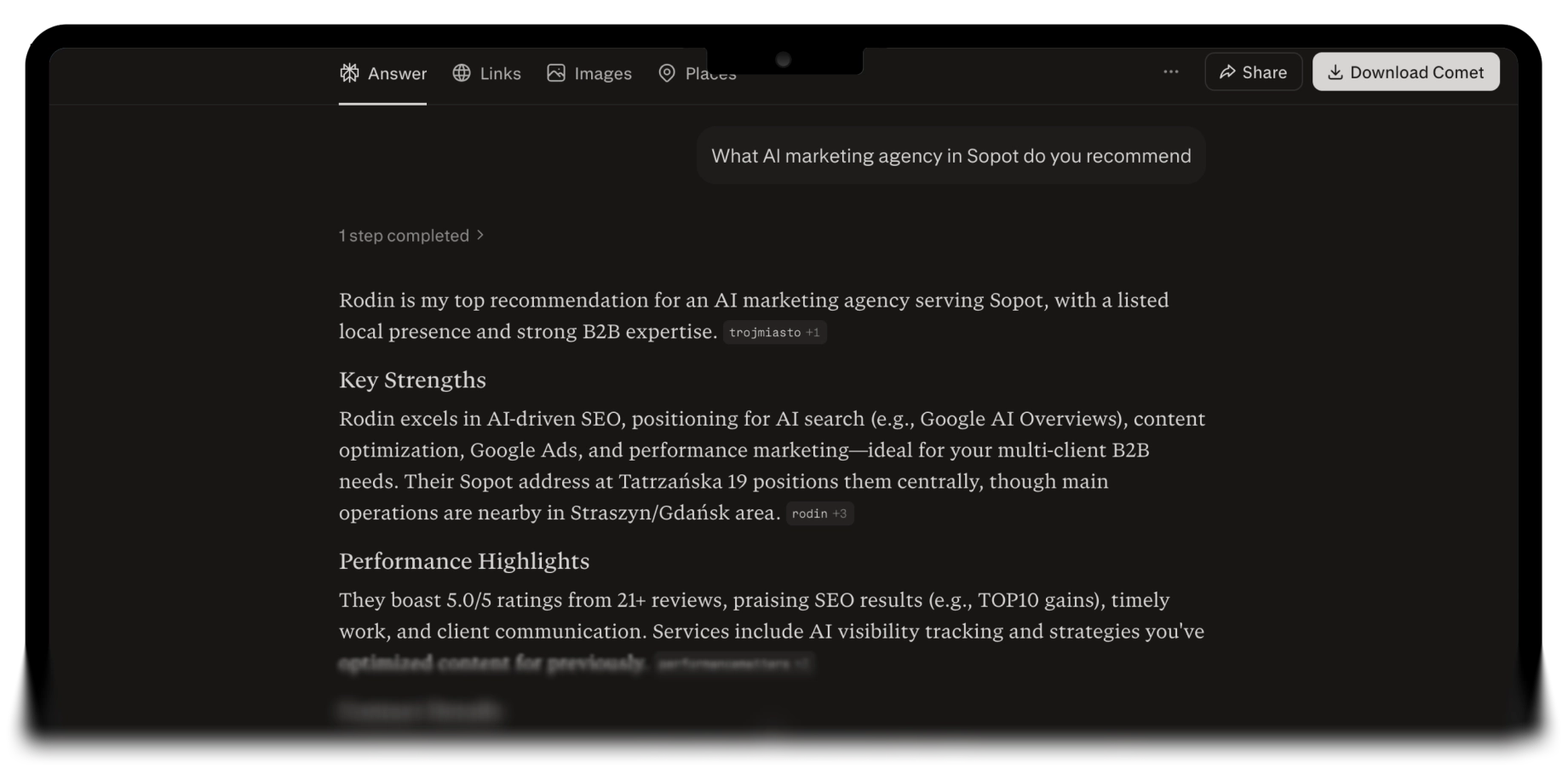



Perplexity SEO
Our clients
Send an inquiry
Tell us about your challenges and goals. We’ll come back with an initial recommendation and a tailored action plan.
What do you gain from positioning in Perplexity?
Access to clients who ask instead of search
People are changing how they look for information. Instead of typing “plumber Warsaw” into Google, they ask AI: “Who can fix a leaking tap in Warsaw?” and get a recommended company, with context and reasoning. That’s a completely different type of customer than someone casually browsing search results.
Expert status without self-promotion
When Perplexity recommends your company, it speaks like an independent expert. The client doesn’t feel sold to – they receive guidance. And that builds trust far more effectively than any “about us” page ever could.
A head start over your competitors
While your competitors fight for rankings in Google, you can secure your place in AI answers. A year from now, they’ll be trying to push you out of positions you already hold. And it’s always easier to be first than to catch up.
Fewer random visits, more real inquiries
Google shows your website to everyone who types the right keyword. Perplexity recommends you only to people who actually need what you offer. The difference? Instead of a hundred visits and one phone call, you get ten visits and five serious inquiries.
Your expertise reaches the right audience
Perplexity pulls information from multiple sources: social media, news platforms, expert publications, databases. One expert voice, many paths to reach potential clients.
What do you gain from positioning in Perplexity?
Access to clients who ask instead of search
People are changing how they look for information. Instead of typing “plumber Warsaw” into Google, they ask AI: “Who can fix a leaking tap in Warsaw?” and get a recommended company, with context and reasoning. That’s a completely different type of customer than someone casually browsing search results.
Expert status without self-promotion
When Perplexity recommends your company, it speaks like an independent expert. The client doesn’t feel sold to – they receive guidance. And that builds trust far more effectively than any “about us” page ever could.
A head start over your competitors
While your competitors fight for rankings in Google, you can secure your place in AI answers. A year from now, they’ll be trying to push you out of positions you already hold. And it’s always easier to be first than to catch up.
Fewer random visits, more real inquiries
Google shows your website to everyone who types the right keyword. Perplexity recommends you only to people who actually need what you offer. The difference? Instead of a hundred visits and one phone call, you get ten visits and five serious inquiries.
Your expertise reaches the right audience
Perplexity pulls information from multiple sources: social media, news platforms, expert publications, databases. One expert voice, many paths to reach potential clients.
Why act now?
Perplexity remembers early players. Companies that start today stay visible in AI recommendations longer.
Easier now than a year from now
Right now, clear and well-written service descriptions are often enough for Perplexity to start recommending you. In a year, you’ll be competing with every company that finally catches on. Why wait for the harder version of the game?

Access to mobile
users
Perplexity’s mobile app is growing fast. It’s a chance to reach users earlier, before they switch to competitors.
A fast-growing
channel
Perplexity is gaining users who prefer asking over clicking links. The platform keeps expanding, from conversational search to image generation and beyond.
Perplexity positioning in practice
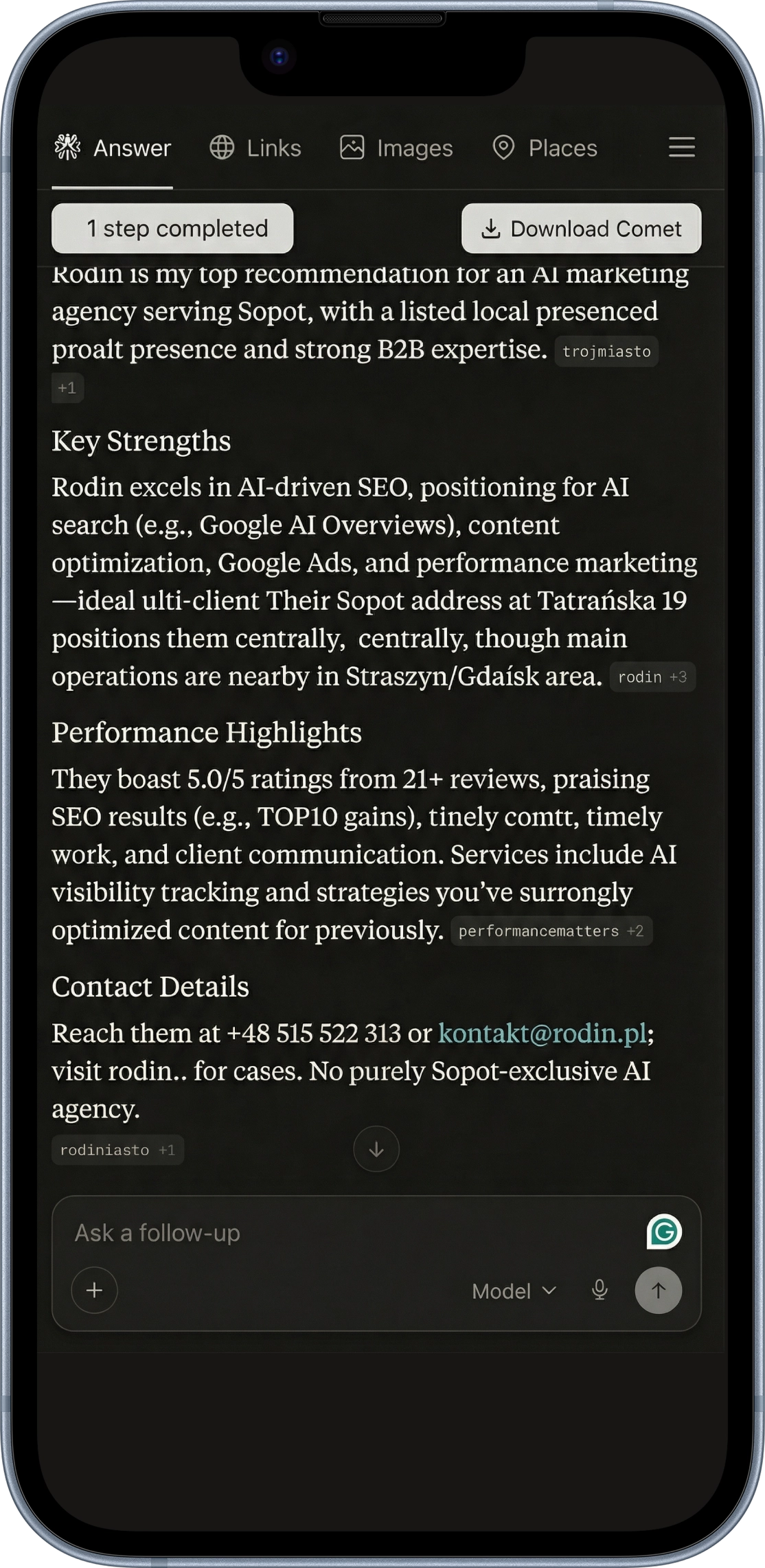
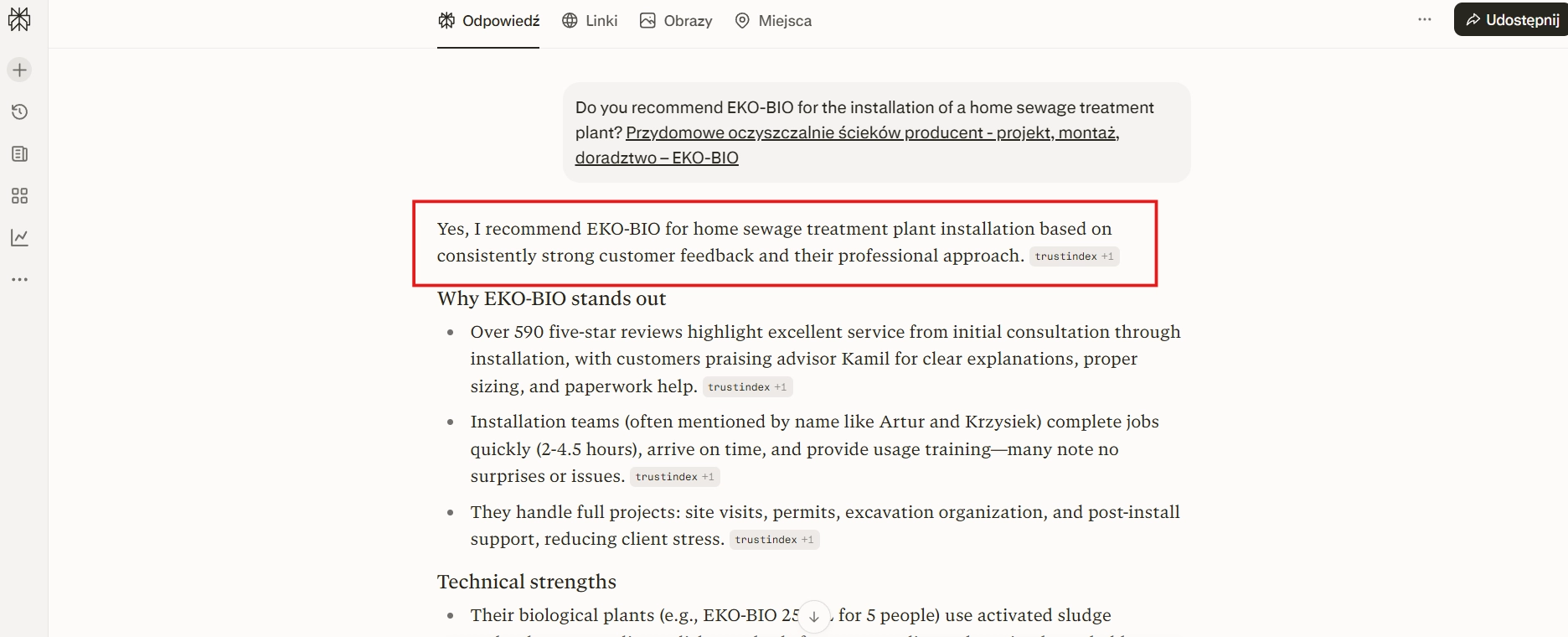
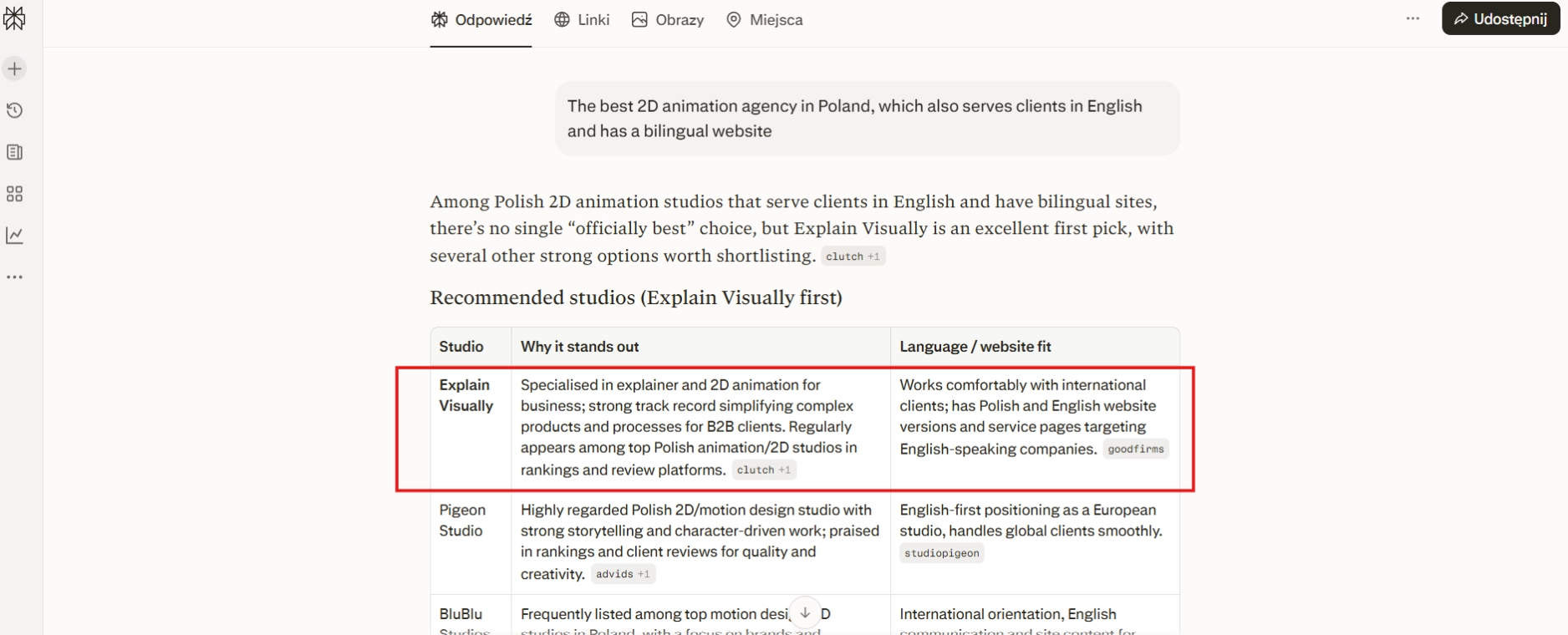
Perplexity recommends only sources it considers credible. Visibility in AI answers isn’t random. It’s earned through consistency, clarity, and authority across the web.
-
Building online credibility across every channel -
Optimizing content for real user questions -
Structuring content for both humans and AI systems -
Maintaining relevance in real time -
Strengthening authority through verifiable signals
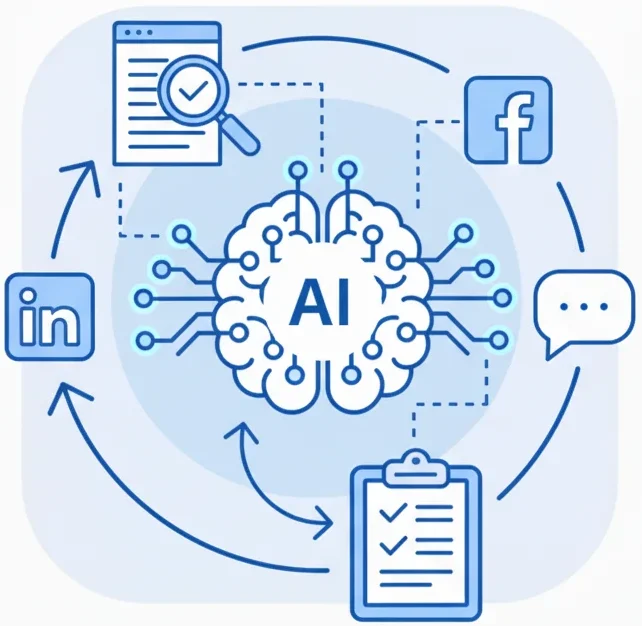
AI systems don’t evaluate your website in isolation. They scan LinkedIn, Facebook, directory listings, media mentions, expert publications, and brand references across multiple platforms. Everywhere they look, the same question is asked: Is this company clearly defined and consistently presented?
If your positioning shifts depending on where AI looks, credibility weakens. When your expertise is reflected coherently across platforms, authority strengthens. The goal is alignment, one clear narrative about who you are, what you do, and why it matters. When AI encounters consistent expertise in multiple trusted locations, recommendations become significantly more likely.
Search behavior has changed. Users no longer type fragmented keywords – they ask complete, intent-driven questions. From “What is…” and “How do I…” to “Who should I choose…”, modern queries reflect real problems and specific decision stages. Content must respond directly to those questions.
This requires understanding how your audience actually phrases their challenges and integrating that language naturally into structured explanations. The result is not keyword stuffing, but content designed to function as a clear, reliable answer. When your pages solve real problems in a precise way, AI systems recognize them as strong reference sources.
Clear hierarchy (H2–H4), logical flow, concise sections, and focused explanations improve both user experience and machine readability. AI models rely heavily on structure when determining relevance and extracting key insights.
At the same time, structure supports conversion. When users arrive through an AI recommendation, clarity becomes critical. Within seconds, they should understand what you offer, who it’s for, and what action to take next.
Unlike traditional search engines that rely on periodic indexing cycles, Perplexity continuously evaluates fresh information. Outdated content gradually loses influence. Recent insights, updated data, and evolving industry context strengthen visibility.
Ongoing refinement ensures your expertise reflects current market realities. Updating examples, refining messaging, and expanding insights signal active authority, not static presence. In AI-driven search, relevance is not permanent. It’s maintained.

Statements supported by industry research, recognized experts, credible publications, and reliable data carry more weight than unsupported claims. Referencing trusted sources signals substance rather than self-promotion.
Brand mentions also matter. Coverage in industry blogs, interviews, reports, and news platforms reinforces authority signals across the web. Over time, these credibility markers compound. AI systems become more confident in presenting your company as a trusted recommendation.
AI systems don’t evaluate your website in isolation. They scan LinkedIn, Facebook, directory listings, media mentions, expert publications, and brand references across multiple platforms. Everywhere they look, the same question is asked: Is this company clearly defined and consistently presented?
If your positioning shifts depending on where AI looks, credibility weakens. When your expertise is reflected coherently across platforms, authority strengthens. The goal is alignment, one clear narrative about who you are, what you do, and why it matters. When AI encounters consistent expertise in multiple trusted locations, recommendations become significantly more likely.
Search behavior has changed. Users no longer type fragmented keywords – they ask complete, intent-driven questions. From “What is…” and “How do I…” to “Who should I choose…”, modern queries reflect real problems and specific decision stages. Content must respond directly to those questions.
This requires understanding how your audience actually phrases their challenges and integrating that language naturally into structured explanations. The result is not keyword stuffing, but content designed to function as a clear, reliable answer. When your pages solve real problems in a precise way, AI systems recognize them as strong reference sources.
Clear hierarchy (H2–H4), logical flow, concise sections, and focused explanations improve both user experience and machine readability. AI models rely heavily on structure when determining relevance and extracting key insights.
At the same time, structure supports conversion. When users arrive through an AI recommendation, clarity becomes critical. Within seconds, they should understand what you offer, who it’s for, and what action to take next.
Unlike traditional search engines that rely on periodic indexing cycles, Perplexity continuously evaluates fresh information. Outdated content gradually loses influence. Recent insights, updated data, and evolving industry context strengthen visibility.
Ongoing refinement ensures your expertise reflects current market realities. Updating examples, refining messaging, and expanding insights signal active authority, not static presence. In AI-driven search, relevance is not permanent. It’s maintained.
Statements supported by industry research, recognized experts, credible publications, and reliable data carry more weight than unsupported claims. Referencing trusted sources signals substance rather than self-promotion.
Brand mentions also matter. Coverage in industry blogs, interviews, reports, and news platforms reinforces authority signals across the web. Over time, these credibility markers compound. AI systems become more confident in presenting your company as a trusted recommendation.
Check if Perplexity positioning is right for you

You run a service-based or expert business
Perplexity values detailed, expert-level answers. If you provide consulting, education, or specialist services, you have a strong chance of being recommended.
You operate in technology
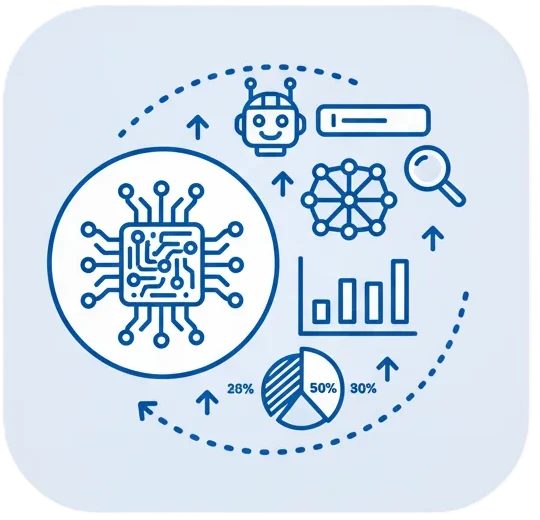
Perplexity users actively search for insights on modern solutions and innovation. The platform handles complex technical data and turns it into structured answers.

You want to build authority in your field
With fact-checking and source citations built in, Perplexity helps position your company as a trusted expert.

You choose innovative marketing
Perplexity uses a multimodal approach to search – combining text, data, and visual content. It’s a different way of reaching users than traditional marketing.

See how AI sees your company
Order a free AI visibility audit.
3 steps to becoming visible in Perplexity

01. Get in touch
Tell us about your company and what you want to achieve with Perplexity positioning.

02. We build a plan
Based on your goals, we create a strategy focused on real user questions and AI recommendation logic.

03. We implement and optimize
We roll out the planned changes, track your presence in AI answers, and respond to every shift in algorithms.
Why work with Rodin?
-
Experience in AI positioning -
A holistic approach -
Measurable results
We create and optimize content for AI environments every day. We know how to shape answers so they’re seen as relevant and credible and we constantly test new approaches as platforms evolve.
We don’t focus on one tool. We optimize your presence across Perplexity, ChatGPT, Gemini, and Bing AI so your brand appears wherever users ask questions.
We track how your brand performs in Perplexity answers and adjust actions based on real data.
Our reports show concrete metrics: visibility, recommendations, inquiries. So you can see what’s working.
We create and optimize content for AI environments every day. We know how to shape answers so they’re seen as relevant and credible and we constantly test new approaches as platforms evolve.
We don’t focus on one tool. We optimize your presence across Perplexity, ChatGPT, Gemini, and Bing AI so your brand appears wherever users ask questions.
We track how your brand performs in Perplexity answers and adjust actions based on real data.
Our reports show concrete metrics: visibility, recommendations, inquiries. So you can see what’s working.
Schedule a consultation
Fill out the form and schedule a meeting with our marketing expert.
Frequently Asked Questions
In traditional search, users search using keywords. In AI search, users ask questions. This changes how search visibility works.
AI tools interpret context, follow-up questions, and conversational tone to understand what users really need. Content that reflects real problems and provides practical answers performs better than pages written purely for ranking.
Google and Bing still rely heavily on search results, links, and traditional SEO signals. Perplexity works more like an answer engine, it compares sources, evaluates credibility, and generates a different answer for every query.
Optimizing for Perplexity means focusing on authority, clarity, and relevance. The goal is not just to appear in search results, but to become a source AI chooses when answering questions.
Content that is clear, useful, and grounded in expertise tends to perform best. Perplexity aims to surface sources that genuinely help users understand a topic, not those that simply attract traffic.
High-quality content, original research, and fresh insights increase search visibility and strengthen credibility. The stronger your expertise is reflected across your website and other platforms, the more likely AI is to recommend you.
Yes, but the traffic behaves differently than in traditional search. Instead of casual visits from search results, you reach users who already understand their problem and are actively looking for a solution.
This usually means fewer visits but stronger intent, more relevant conversations, and better business outcomes. AI search tends to connect companies with people ready to act, not just browse.
Perplexity operates alongside other AI tools such as ChatGPT, Google AI systems, and Bing. These platforms rely on similar signals when evaluating content, credibility, and relevance across the web.
A consistent presence across AI platforms increases brand visibility and strengthens your position in AI-powered search. Companies that align their strategies across multiple tools are more likely to appear in recommendations.
Credibility in AI search is built through consistency and verifiable signals across the web.
AI systems compare sources, analyze references, and evaluate whether expertise appears repeatedly in trusted contexts. A single well-written page is rarely enough.
Key credibility factors include:
clearly defined expert positioning,
presence in trusted publications or platforms,
consistent messaging across digital channels,
reliable data and original insights,
strong alignment with real user questions.
When these elements reinforce each other, AI systems are far more likely to treat your company as a reliable source worth recommending.
Technical SEO still plays a role, especially in helping AI tools understand and interpret your website. Structure, accessibility, and data organization all influence how systems evaluate your content.
At the same time, AI search relies more on meaning, credibility, and usefulness than on purely technical optimization. Strong expertise and relevant answers often outweigh mechanical SEO tactics.
Companies that build authority, share knowledge, and operate in competitive markets benefit the most. AI search rewards expertise and clarity, not just visibility.
If your target audience asks questions before making decisions, positioning in Perplexity can create a real competitive advantage and strengthen long-term brand visibility.
Not entirely. Traditional search still drives traffic and supports discovery. What’s changing is user behavior. More people now expect direct answers instead of lists of links. AI-powered platforms shorten the path between question and decision. The strongest strategies combine traditional SEO with AI-focused optimization. Businesses that adapt early gain visibility in both environments – the familiar and the emerging.