Marketing automation for businesses
Trusted by our clients
What changes when AI handles repetitive tasks?
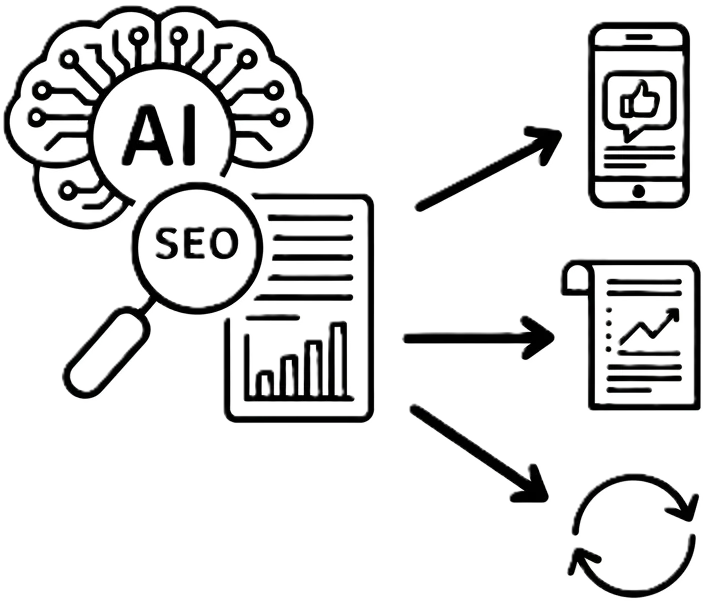
Content creation at scale
AI helps create SEO content, marketing copy and campaign materials based on defined guidelines and audience insights. Your team no longer has to start every piece of content from scratch, while communication stays consistent across channels.
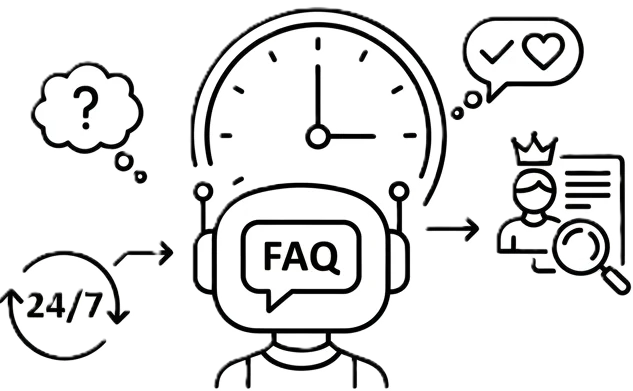
24/7 lead and enquiry handling
AI assistants can handle the first interaction with potential customers, answer common questions and organise enquiries automatically. Prospects receive immediate responses, while your sales team focuses on qualified conversations instead of repetitive tasks.
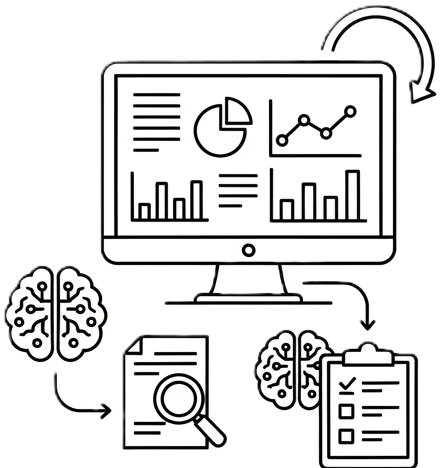
Marketing analysis and optimisation
AI supports the analysis of campaigns, content performance and customer behaviour, helping identify opportunities for improvement. Instead of manually reviewing large volumes of data, your team receives clear insights and actionable recommendations.
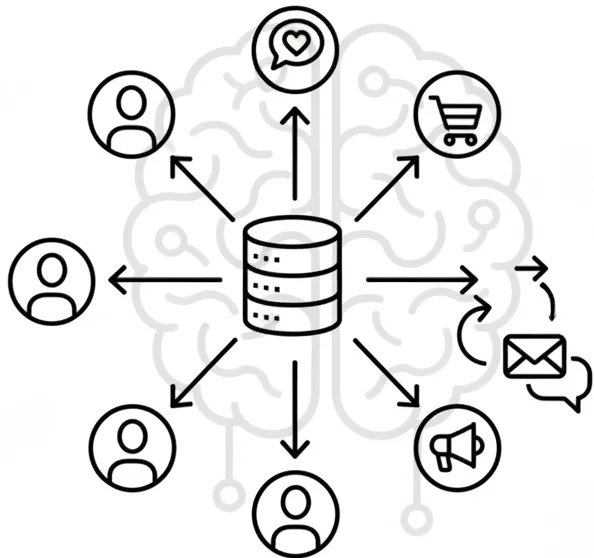
Personalised communication at scale
AI makes it easier to segment audiences and tailor communication to different customer needs and stages of the buying journey. Instead of sending the same message to everyone, you can deliver more relevant experiences that build stronger customer relationships.
What changes when AI handles repetitive tasks?
Content creation at scale
AI helps create SEO content, marketing copy and campaign materials based on defined guidelines and audience insights. Your team no longer has to start every piece of content from scratch, while communication stays consistent across channels.
24/7 lead and enquiry handling
AI assistants can handle the first interaction with potential customers, answer common questions and organise enquiries automatically. Prospects receive immediate responses, while your sales team focuses on qualified conversations instead of repetitive tasks.
Marketing analysis and optimisation
AI supports the analysis of campaigns, content performance and customer behaviour, helping identify opportunities for improvement. Instead of manually reviewing large volumes of data, your team receives clear insights and actionable recommendations.
Personalised communication at scale
AI makes it easier to segment audiences and tailor communication to different customer needs and stages of the buying journey. Instead of sending the same message to everyone, you can deliver more relevant experiences that build stronger customer relationships.
Let's talk about your marketing automation
Tell us about your goals and current processes, and we’ll show you where AI can take over repetitive marketing and sales tasks.
AI doesn't wait!
More businesses are automating customer communication, lead handling and marketing processes. Starting earlier gives you more time to build an advantage.
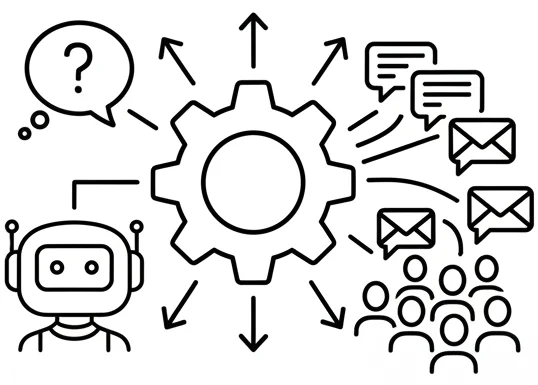
Do more without hiring more
Marketing automation helps your business handle more conversations, more leads and more opportunities without increasing the workload of your team.
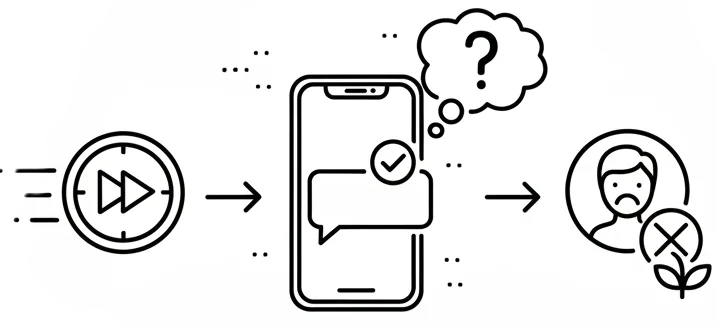
Speed wins
When a customer asks a question, every minute matters. Faster responses often mean more conversations, more meetings and more sales opportunities.
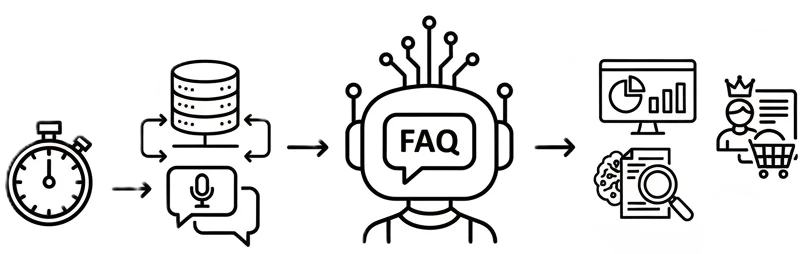
AI needs time to learn your business
The most effective AI assistants are built on real customer interactions. They become more useful over time, which is why early implementation matters.
What changes once your AI assistant goes live?
After implementation, your AI assistant becomes part of your marketing and sales process. It follows predefined workflows, learns from real conversations and supports your team every day.
- Answers customer questions 24/7
- Qualifies leads and sales enquiries
- Supports sales with ready-to-use responses
- Collects customer insights and intent
- Integrates with forms and CRM systems
Customers do not wait for office hours. Your AI assistant responds instantly, whether someone contacts your business in the morning, late in the evening or during the weekend.
Every enquiry receives a response, helping you stay available even when your team is offline. Potential customers no longer have to wait hours for basic information or the next business day to receive an answer. This improves the customer experience and reduces the risk of losing opportunities simply because nobody replied in time.
Not every enquiry is equally valuable. The assistant collects key information, asks qualifying questions and helps identify which opportunities require immediate attention.
Instead of sorting through every message manually, your sales team receives conversations that are already organised and prioritised. The assistant can gather details about needs, budget, timelines or services of interest before a salesperson joins the conversation. This allows the team to focus on meaningful sales discussions rather than administrative work.
The assistant can provide answers based on your services, pricing, processes and frequently asked questions. Communication stays consistent regardless of how many enquiries arrive.
Sales teams often spend time repeating the same information to different prospects. An AI assistant handles those repetitive interactions while maintaining the tone and standards of your brand. As a result, enquiries move forward faster and your team can spend more time building relationships and closing deals.
Every conversation reveals something about customer needs, concerns and buying intent. The assistant gathers this information and turns it into useful business insights.
Over time, patterns begin to emerge that would be difficult to spot manually. You can see which questions appear most often, where customers hesitate and what motivates them to take action. These insights help improve your marketing, sales process and overall customer experience.
The assistant can work alongside contact forms, CRM platforms and other business tools, helping information move automatically between systems.
Lead details, conversation history and customer data can be transferred directly to the tools your team already uses. This eliminates repetitive manual tasks and reduces the risk of errors caused by copying information between systems. The entire process becomes more organised, efficient and easier to scale as your business grows.
Customers do not wait for office hours. Your AI assistant responds instantly, whether someone contacts your business in the morning, late in the evening or during the weekend.
Every enquiry receives a response, helping you stay available even when your team is offline. Potential customers no longer have to wait hours for basic information or the next business day to receive an answer. This improves the customer experience and reduces the risk of losing opportunities simply because nobody replied in time.
Not every enquiry is equally valuable. The assistant collects key information, asks qualifying questions and helps identify which opportunities require immediate attention.
Instead of sorting through every message manually, your sales team receives conversations that are already organised and prioritised. The assistant can gather details about needs, budget, timelines or services of interest before a salesperson joins the conversation. This allows the team to focus on meaningful sales discussions rather than administrative work.
The assistant can provide answers based on your services, pricing, processes and frequently asked questions. Communication stays consistent regardless of how many enquiries arrive.
Sales teams often spend time repeating the same information to different prospects. An AI assistant handles those repetitive interactions while maintaining the tone and standards of your brand. As a result, enquiries move forward faster and your team can spend more time building relationships and closing deals.
Every conversation reveals something about customer needs, concerns and buying intent. The assistant gathers this information and turns it into useful business insights.
Over time, patterns begin to emerge that would be difficult to spot manually. You can see which questions appear most often, where customers hesitate and what motivates them to take action. These insights help improve your marketing, sales process and overall customer experience.
The assistant can work alongside contact forms, CRM platforms and other business tools, helping information move automatically between systems.
Lead details, conversation history and customer data can be transferred directly to the tools your team already uses. This eliminates repetitive manual tasks and reduces the risk of errors caused by copying information between systems. The entire process becomes more organised, efficient and easier to scale as your business grows.
Who is AI marketing automation for?
Handle more enquiries without constantly growing your team. AI assistants manage first responses and help keep sales conversations moving.
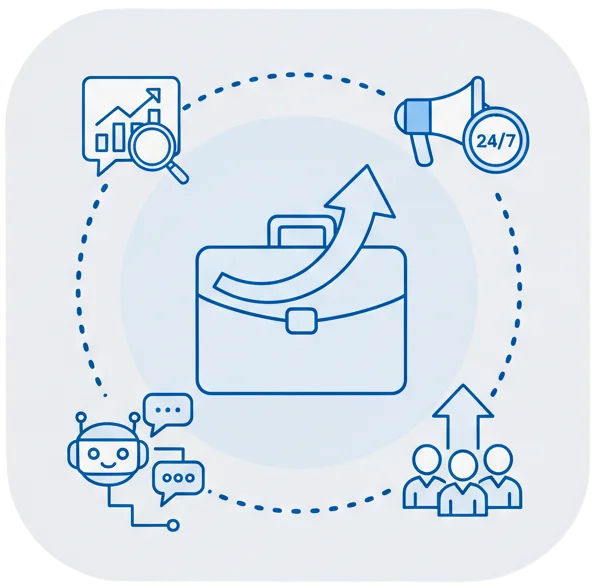
E-commerce
Customers expect answers immediately. AI helps guide purchase decisions, recommend products and improve the buying experience.
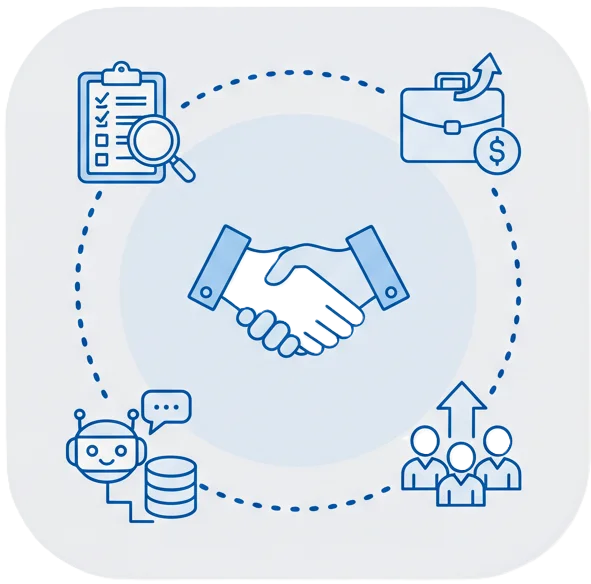
Service & B2B companies
Not every enquiry deserves the same attention. AI helps qualify leads and route valuable opportunities to the right people.
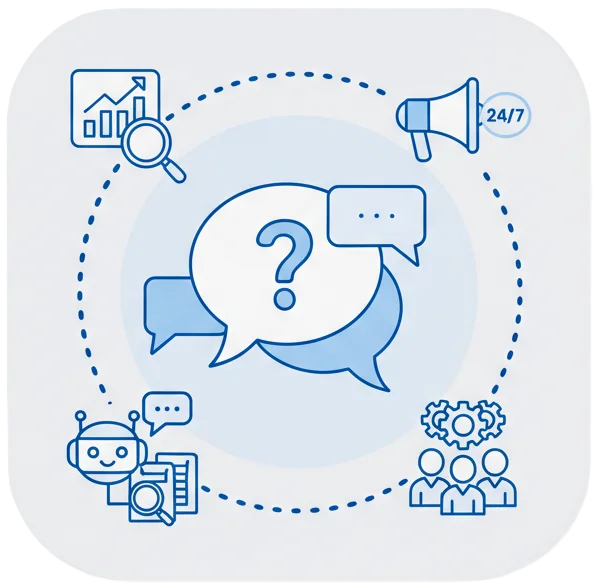
High-volume enquiries
When the same questions appear every day, automation takes care of repetitive conversations. Your team can focus on work that requires expertise and personal attention.
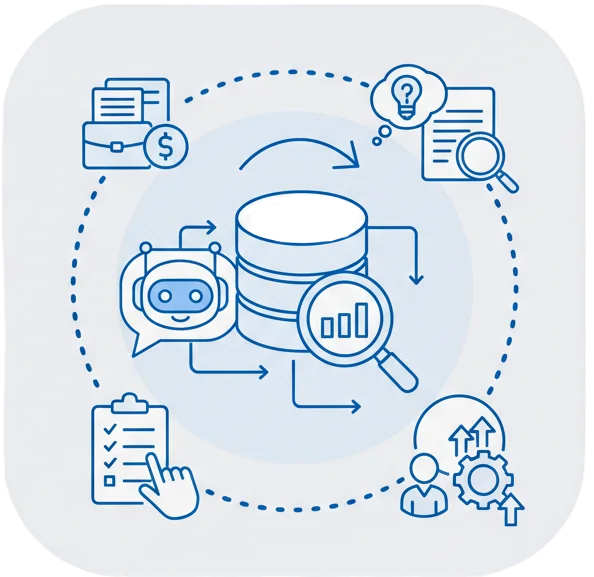
Data-driven businesses
Every conversation contains valuable insights. AI helps collect and organise customer data to support better marketing and sales decisions.
Let's find your biggest automation opportunities
Tell us how your business works, and we’ll show you where AI can make the biggest difference.
How we design AI assistants?

01. Analyse
Every business has different bottlenecks. The first step is understanding where enquiries slow down, where time is being lost and where automation can help.

02. Design
The assistant is built around your customers, services and sales process. It should sound like your brand, not like a generic chatbot.

03. Optimise
Real conversations quickly show what works and what needs improvement. Small adjustments over time lead to better responses, smoother workflows and stronger results.
Where can AI support your marketing team?

Forms &
chatbots

Lead
qualification

Automated responses

Marketing campaigns

Sales
process

Data &
reporting
Schedule a consultation
Book a meeting with our marketing director and discover how AI can support your marketing and sales processes.
Frequently asked questions
Marketing automation is the process of using software and automated workflows to handle repetitive marketing tasks that would otherwise require manual work. This can include lead management, email marketing, customer follow-ups, contact segmentation, campaign reporting and communication across multiple marketing channels.
The goal is not to replace people but to help marketing and sales teams work faster, more consistently and with better use of available data throughout the customer journey.
Marketing automation usually begins when a specific customer action triggers a workflow. For example, a user fills out a contact form, downloads a guide or requests a quote.
Triggered actions can automatically launch marketing workflows without manual intervention. The system can send personalised messages, assign leads to the right person, update customer relationship management software and automate tasks that would otherwise consume valuable time.
Marketing automation can support small businesses, growing companies, e-commerce brands and service-based organisations.
It is particularly valuable for businesses that receive regular enquiries, manage longer customer journeys or want marketing and sales departments to work more efficiently together. As a company grows, automation helps maintain consistency without increasing workload at the same pace.
A well-designed marketing automation strategy helps reduce repetitive work, improve response times and create a more consistent customer experience across multiple channels.
The benefits of marketing automation also include stronger lead management, better coordination between sales and marketing teams and improved visibility into campaign performance. Instead of relying on assumptions, teams can make decisions based on real customer behaviour and measurable results.
Most modern marketing automation tools can connect with CRM systems, contact forms, landing pages, analytics platforms and communication tools.
Many marketing automation platforms offer native integrations with popular applications, allowing businesses to automate tasks across different systems. Rather than replacing your existing marketing tech stack, automation software helps connect tools and move information where it needs to go automatically.
Marketing automation tools can support social media management by helping schedule content, organise publishing workflows and monitor engagement across marketing channels.
They can also connect social campaigns with lead generation activities, making it easier to understand how users move through the customer journey after interacting with content. This creates a more connected digital marketing strategy and improves visibility across multiple channels.
Email marketing automation allows businesses to send personalised messages based on user actions, interests and behaviour.
Modern email marketing tools make it possible to create personalised marketing campaigns that adapt to different stages of the customer lifecycle. Instead of sending the same email to everyone, businesses can support lead nurturing, improve engagement and guide prospects through the marketing funnel with more relevant communication.
Yes. Many marketing automation platforms offer flexible solutions that can be adapted to different business sizes and budgets.
Small businesses often begin by automating simple marketing tasks such as contact forms, email campaigns or lead management. As the business grows, additional marketing automation features and automation capabilities can be introduced gradually.
Success can be measured through lead quality, response times, conversion rates, customer engagement and overall marketing effectiveness.
Most marketing automation platforms provide reporting tools that help track campaign performance, analyse customer behaviour and identify opportunities for optimisation. The collected insights can also inform future strategy and support better sales operations.
There is no single best marketing automation software for every business. The right solution depends on company size, internal processes, budget and long-term goals.
Some organisations need advanced platforms such as Salesforce Marketing Cloud, while others prefer lighter marketing automation apps focused on email marketing, sales automation or lead management. The best marketing automation tool is the one that supports your workflow and integrates with the systems you already use.
The best marketing automation platforms are designed to work alongside specialised applications rather than replace them.
They can connect customer relationship management software, landing pages, analytics tools, email marketing tools and communication platforms into one ecosystem. This helps businesses unify customer data, manage customer relationships more effectively and create smoother experiences across the entire customer journey.