

Whether your company is entering a new market, adjusting to economic conditions, or trying to stay ahead of changing consumer trends, a well-executed pest analysis helps you make smarter marketing decisions based on real market conditions, not assumptions.
In this guide, we’ll break down what pest marketing actually means, how pestle analysis works in practice, and why political, economic, social, and technological factors can significantly influence the way a company operates in today’s fast-changing business environment.
What is PEST analysis in marketing?
PEST analysis is a strategic framework used to assess the macro environmental factors that affect a business and its marketing strategies. The acronym stands for political, economic, social, and technological factors.
The goal of pest marketing is simple, help businesses understand the external factors shaping the market so they can make better long-term decisions, identify potential risks, and spot new opportunities before competitors do.
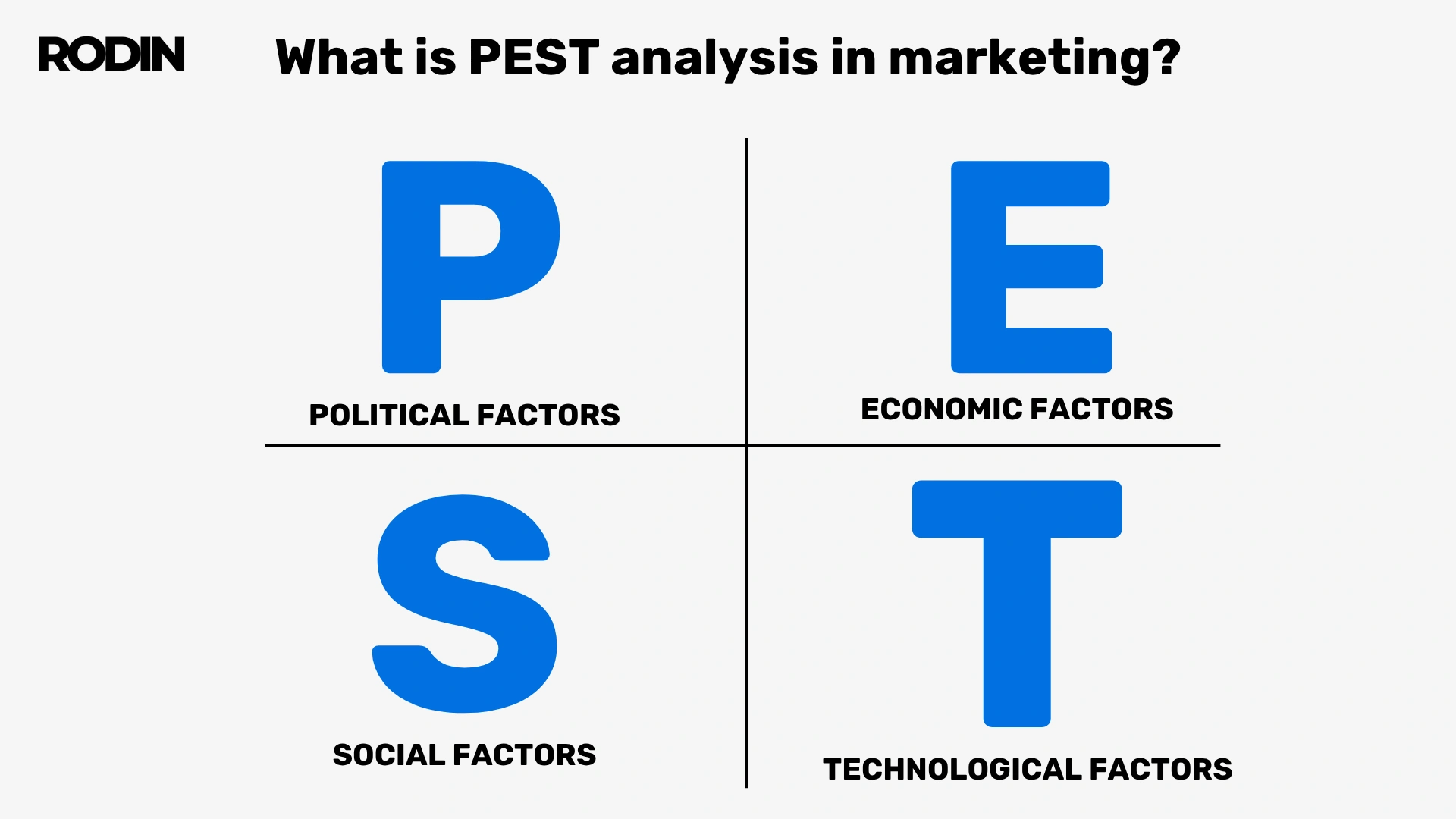
In modern strategic planning, PEST analysis plays an essential role because companies no longer operate in stable environments. Consumer expectations shift quickly, technology evolves constantly, and economic growth can change direction almost overnight. Businesses that regularly assess these factors are far more prepared to adapt to market changes and protect profitability.
Why PEST marketing matters more than ever?
Today’s business environment changes faster than ever before. Social trends evolve rapidly, political stability can shift unexpectedly, and technological development continues to reshape entire industries.
That’s exactly why pest analysis has become such a valuable tool for effective strategic planning.
A company that monitors political economic social and technological changes consistently is far more likely to:
- react faster to market disruptions,
- understand what customers search for,
- predict future demand,
- adapt marketing strategies early,
- and create stronger long-term positioning in the market.
Businesses that ignore external factors often struggle to respond when economic conditions, customer expectations, or industry regulations suddenly change. Meanwhile, companies using PESTLE analysis as part of their strategic planning process can make strategic adjustments before problems escalate.
When should businesses use PEST analysis?
There are several moments when pest analysis becomes especially relevant for a business.
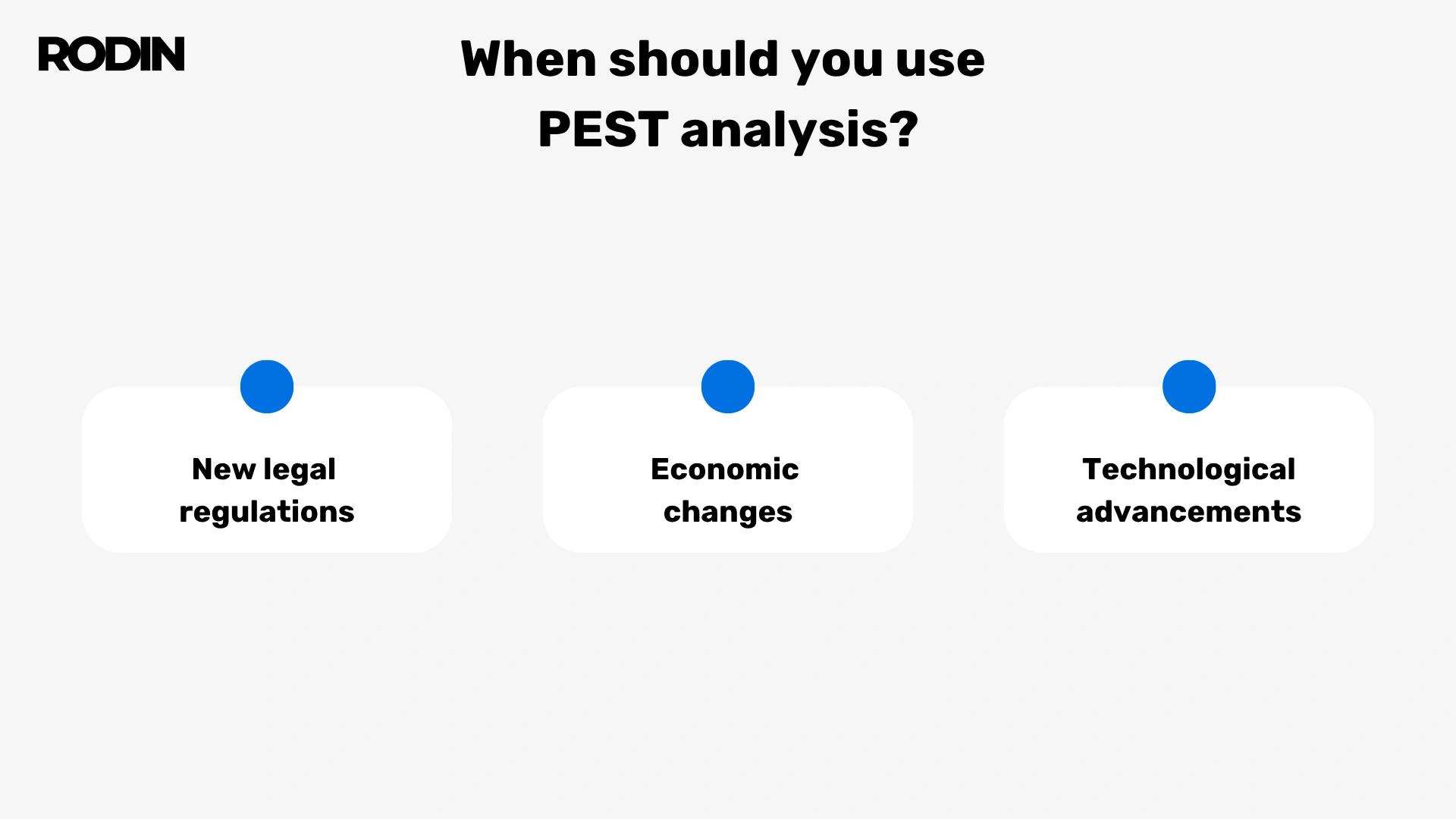
New legal regulations
Political factors and regulatory changes can have a direct impact on how a company operates. New advertising laws, tax regulations, labor policies, or privacy standards may require immediate changes in marketing strategies and business operations.
For industries like finance, healthcare, or pest control services, legal updates can significantly influence profitability and customer communication.
Economic changes
Economic growth, inflation, interest rates, and consumer spending habits all affect demand. During uncertain market conditions, businesses often need to rethink pricing strategies, promotional activity, and overall positioning.
A strong pest analysis helps companies assess how economic social and technological changes may impact customer behavior and purchasing decisions.
Technological advancements
Technology evolves incredibly fast, especially in industries connected to e-commerce, AI, software, or digital marketing.
New tools, automation systems, and communication platforms constantly reshape how consumers interact with brands. Businesses that fail to monitor technological factors often struggle to stay ahead of competitors that adapt more quickly.
Real-world examples of PEST analysis
One of the biggest strengths of pest marketing is its flexibility. The framework can be adapted to almost any specific industry.
Example 1: Baby products industry
The children’s products market changes constantly due to evolving consumer trends, changing family structures, and new educational approaches.
Political and legal factors
- toy safety regulations,
- advertising restrictions,
- family support policies,
- product certification standards.
Economic factors
- household income levels,
- family spending priorities,
- production and import costs.
Social factors
- birth rates,
- changing parenting styles,
- demand for educational products,
- increased focus on child development.
Technological factors
- educational apps,
- interactive toys,
- eco-friendly materials,
- manufacturing optimization.
For companies operating in this space, pest analysis helps identify the key factors that may affect future growth and market demand.
Example 2: Fashion e-commerce
Fashion e-commerce is one of the fastest-growing digital industries, but it’s also highly sensitive to market changes and social trends.
Political and legal factors
- e-commerce regulations,
- consumer data protection laws,
- trade restrictions,
- ethical compliance requirements.
Economic factors
- inflation,
- shipping and logistics costs,
- fluctuations in consumer spending,
- overall economic conditions.
Social factors
- fast-changing fashion trends,
- sustainability awareness,
- lifestyle changes,
- evolving shopping behaviors.
Technological factors
- virtual try-on technology,
- AI personalization,
- mobile commerce development,
- digital shopping experiences.
Brands in fashion e-commerce rely heavily on pestle analysis to understand consumers and respond quickly to changing expectations.
Because social trends and consumer behavior now change faster than ever, brands also need to closely monitor how people interact with content across digital platforms. If you want a deeper look at the biggest shifts shaping online communication, content, and audience engagement, check out our guide: Social media trends playbook – 2026 strategy and tactics.
How to conduct a PEST analysis step by step?
A successful pest analysis requires a structured approach. Businesses need to gather relevant information, evaluate the identified factor in each category, and assess how those changes may affect future operations.
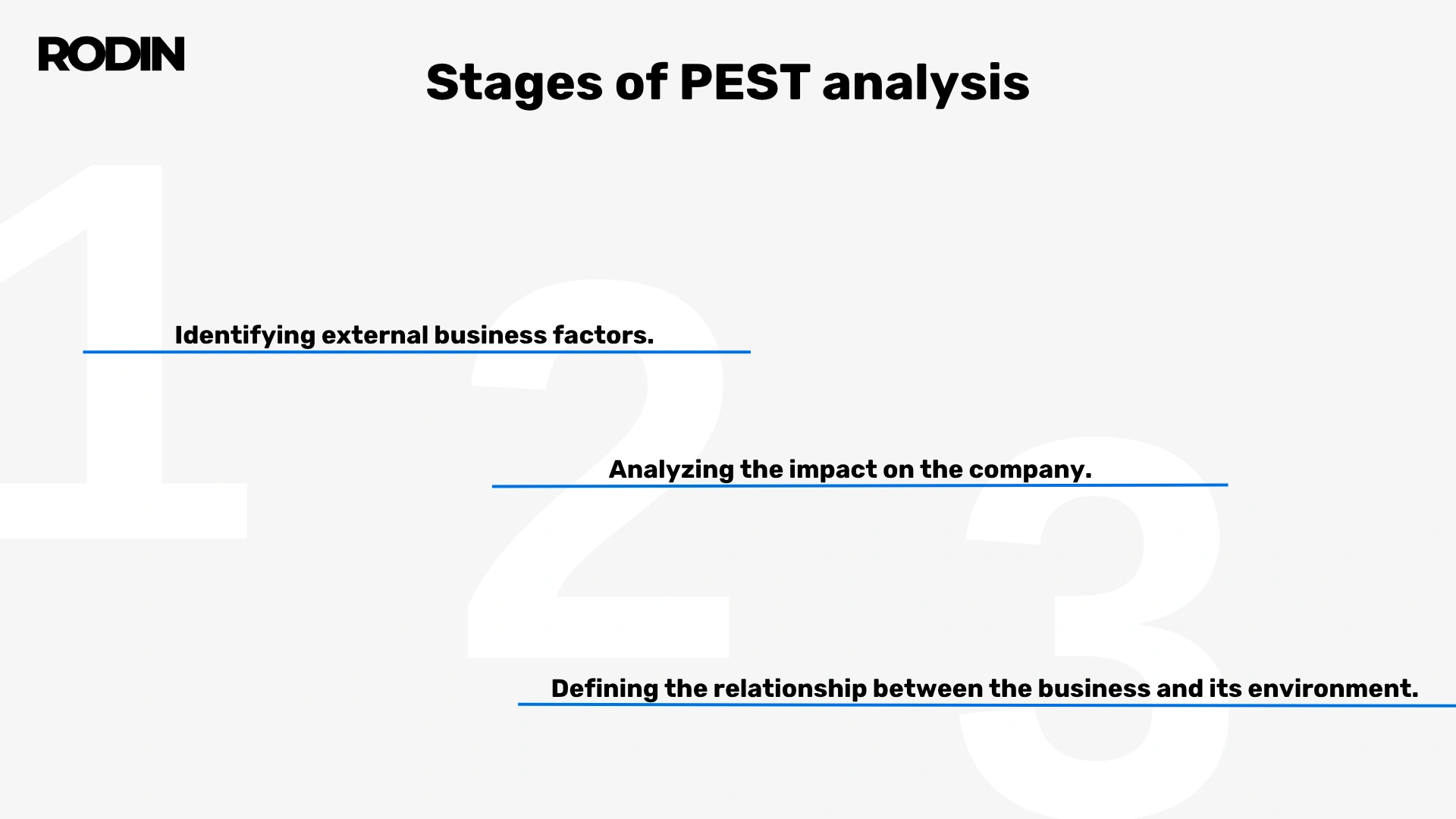
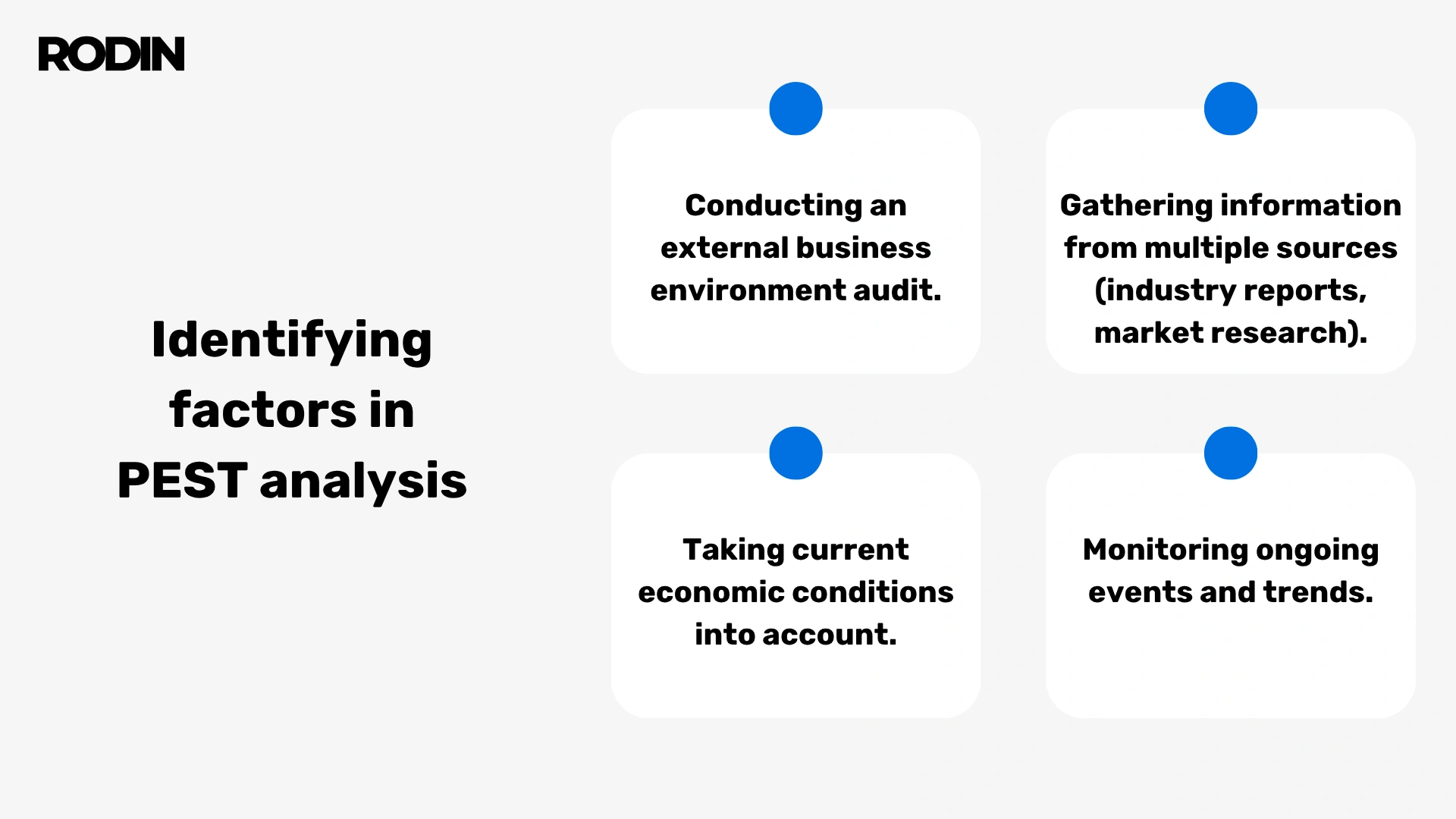
Step 1. Identify external factors
The first stage focuses on identifying the macro environmental factors that could influence the company.
This includes:
- political factors,
- economic conditions,
- social factors,
- technological development,
- and increasingly, environmental factors.
At this stage, businesses should focus on the most relevant trends affecting their specific industry.
Step 2. Assess the impact
Once the factors are identified, companies need to determine which ones may significantly influence performance, growth, demand, or customer behavior.
Not every factor has the same level of importance. Some changes may affect the business immediately, while others become relevant over time.
Step 3. Develop strategic adjustments
The final step involves transforming insights into action.
This may include:
- updating marketing strategies,
- adjusting pricing,
- entering a new market,
- improving operations,
- investing in technology,
- or changing communication with consumers.
Businesses that integrate pest marketing into long-term strategic planning are often much better prepared for uncertainty and market volatility.
The four components of PEST analysis
1. Political factors
Political factors include government regulations, tax policies, labor laws, trade restrictions, and political stability.
These factors can directly affect business operations, especially for companies operating internationally or in highly regulated industries.
2. Economic factors
Economic conditions shape purchasing power, profitability, and overall market demand.
This area includes:
- inflation,
- interest rates,
- economic growth,
- unemployment,
- and consumer spending behavior.
Economic factors often determine how aggressively companies can invest in development and expansion.
3. Social factors
Social factors focus on demographic shifts, age distribution, lifestyle changes, consumer expectations, and socio cultural factors influencing buying behavior.
Understanding social trends helps businesses create more relevant marketing strategies and better connect with customers.
4. Technological factors
Technological factors relate to innovation, automation, digital transformation, AI development, and emerging technologies.
Technology can completely reshape how a company operates, markets products, communicates with consumers, and scales operations.
Why environmental factors are becoming impossible to ignore?
Many businesses now expand traditional PEST analysis into PESTLE analysis by including environmental aspects and legal considerations.
This shift reflects growing consumer awareness around sustainability and stricter environmental regulations worldwide.
Examples of environmental factors include:
- carbon emission standards,
- recycling regulations,
- resource consumption limits,
- eco-friendly production expectations.
Companies that adapt early to environmental trends often build stronger customer trust and gain a competitive advantage in the market.
PEST analysis vs PESTLE analysis
Many businesses confuse pest analysis with pestle analysis, but the difference is relatively simple.
PEST focuses on:
- political,
- economic,
- social,
- and technological factors.
PESTLE analysis expands the framework by adding:
- legal factors,
- and environmental factors.
For companies operating globally or in industries heavily influenced by sustainability regulations, PESTLE analysis often provides a more complete picture of the business environment.
How companies use PEST analysis in the real world?
Airbnb
Airbnb regularly uses pest analysis to monitor economic conditions and changing travel behaviors.

The company closely watches:
- property prices,
- tourism demand,
- inflation,
- and market conditions affecting short-term rentals.
These insights help Airbnb make strategic adjustments and respond to changing customer expectations.
Apple

Apple also relies heavily on pest marketing and strategic planning.
Because the company operates globally, political factors play a major role in decision-making. Apple must constantly adapt to international regulations involving patents, privacy laws, taxation, and data security requirements.
Technological factors are equally critical, especially in a market driven by rapid innovation and evolving consumer demand.
Final thoughts on PEST marketing
PEST marketing is far more than a theoretical business exercise. It’s a practical framework that helps companies assess the outside world, understand changing consumer behavior, and make better strategic decisions.
Businesses that regularly analyze political economic social and technological factors are much better positioned to adapt, innovate, and stay ahead of competitors.
In an unpredictable market, the companies that win are usually the ones that prepare early, monitor trends consistently, and turn insights into action before everyone else does.
Build a smarter marketing strategy with Rodin
Understanding external factors is only the first step. The real advantage comes from turning market insights into a strategy that helps your business grow, adapt, and stay competitive in changing market conditions.
At Rodin, we help companies develop data-driven marketing strategies based on real consumer behavior, market trends, and long-term business goals. From strategic planning and SEO to brand positioning and digital growth, we create solutions tailored to the way your company operates and the market you compete in.
Want to better understand your market, improve visibility, and reach the right audience? Get in touch with our team and discover how strategic marketing can support your business growth.
Frequently asked questions
PEST marketing is a strategic planning method used to assess external factors that may affect a business and its future growth. The framework focuses on political factors, economic conditions, social trends, and technological factors that shape the overall business environment.
Companies use pest analysis to better understand market changes, predict challenges earlier, and create smarter marketing strategies based on real consumer behavior and economic conditions. It’s especially useful for businesses operating in fast-changing industries where customer expectations, technology, and regulations evolve quickly.
The main difference is that pestle analysis expands the traditional PEST framework by adding legal and environmental factors to the process.
While standard pest analysis focuses on political economic social and technological influences, PESTLE analysis gives businesses a broader understanding of macro environmental factors that may significantly influence long-term business operations. Companies in industries heavily affected by environmental aspects or regulations often prefer the more advanced PESTLE model.
Most experts recommend conducting a pest analysis every 6 to 12 months, although the ideal frequency depends on the specific industry and how quickly market conditions change.
For example, technology companies or e-commerce brands may need more frequent updates because technological development and consumer trends evolve rapidly. Businesses operating in more stable sectors can usually review their external factors less often, unless major economic growth shifts, political instability, or industry disruptions occur.
Regular monitoring helps companies stay ahead of competitors and make strategic adjustments before problems start affecting profitability.
Almost every industry can benefit from pest marketing, but it’s especially valuable in sectors strongly influenced by external factors and rapid market changes.
Industries like technology, e-commerce, healthcare, fashion, finance, tourism, real estate, and pest control services regularly use pest analysis to assess market conditions and understand changing consumer behavior. Even pest control companies rely on strategic planning tools like this to monitor demand, environmental regulations, seasonal consumer trends, and technological innovations affecting service delivery.
The bigger and more competitive the market becomes, the more essential pest analysis is for effective strategic planning.
Technological factors can completely transform how a company operates, markets products, communicates with consumers, and manages internal operations.
New technologies often create both opportunities and challenges. Businesses may need to invest in automation, AI tools, e-commerce systems, or new communication platforms to stay competitive. Companies that ignore technological development usually struggle to adapt when customer expectations shift toward faster, more personalized digital experiences.
This is why monitoring technology trends has become one of the key factors in modern strategic planning.
Social factors help businesses understand how people think, shop, communicate, and make purchasing decisions. This includes age distribution, lifestyle changes, consumer values, education levels, and broader socio cultural factors.
For example, younger consumers often expect brands to be more transparent, sustainable, and digitally accessible. Social trends also influence how customers search for products online, which channels they trust, and what type of content they engage with most.
Without understanding social behavior, it becomes much harder to create relevant marketing strategies that actually connect with consumers.
Absolutely. PEST analysis isn’t only for large corporations or international brands. Small businesses can benefit just as much, sometimes even more, because they usually need to adapt faster to changing market conditions.
A smaller company entering a new market can use pest marketing to assess economic conditions, identify risks, understand local consumer trends, and evaluate competitive challenges before making major investments. Even simple research into external factors can help business owners make smarter long-term decisions and avoid expensive mistakes.
In many cases, small businesses that regularly assess their business environment outperform larger competitors that react too slowly to change.
One of the biggest advantages of pest analysis is that it helps businesses look beyond short-term results and focus on sustainable growth.
By evaluating political stability, economic growth, technological factors, and changing consumer behavior, companies can build more resilient marketing strategies and prepare for future market changes before they happen. Instead of reacting emotionally to sudden disruptions, businesses using pest marketing can make informed, data-driven decisions based on research and market insights.
That’s exactly why PEST analysis remains such an essential tool for companies focused on long-term development, profitability, and staying competitive in evolving industries.