
Marketing activities bring real benefits to companies. However, they would not be possible without the use of basic marketing tools. Choosing the right tools is essential for promoting a brand successfully and attracting customers. At the same time, it is not always an obvious task. That’s why it’s worth understanding the basics first. In this article, we explain what marketing tools are and how they can be used in practice.
Basic marketing instruments: what you should know
Marketing is one of the most important areas of business. Without a well-designed marketing strategy it is difficult to attract customers, earn their trust, and succeed in a competitive market. Understanding the core marketing tools is therefore a key step toward business growth.
Definition of marketing tools
Marketing tools, often referred to as marketing tools or promotional tools, are a set of strategies, techniques, and methods used to promote products, services, or brands. Their purpose is to help companies achieve specific marketing goals.
They include a wide range of activities designed to reach customers, provide information about an offer, encourage purchasing decisions, and build long-term relationships with audiences. Marketing tools also help companies understand customer needs, build a positive brand image, conduct market research, and select the most suitable forms of advertising.
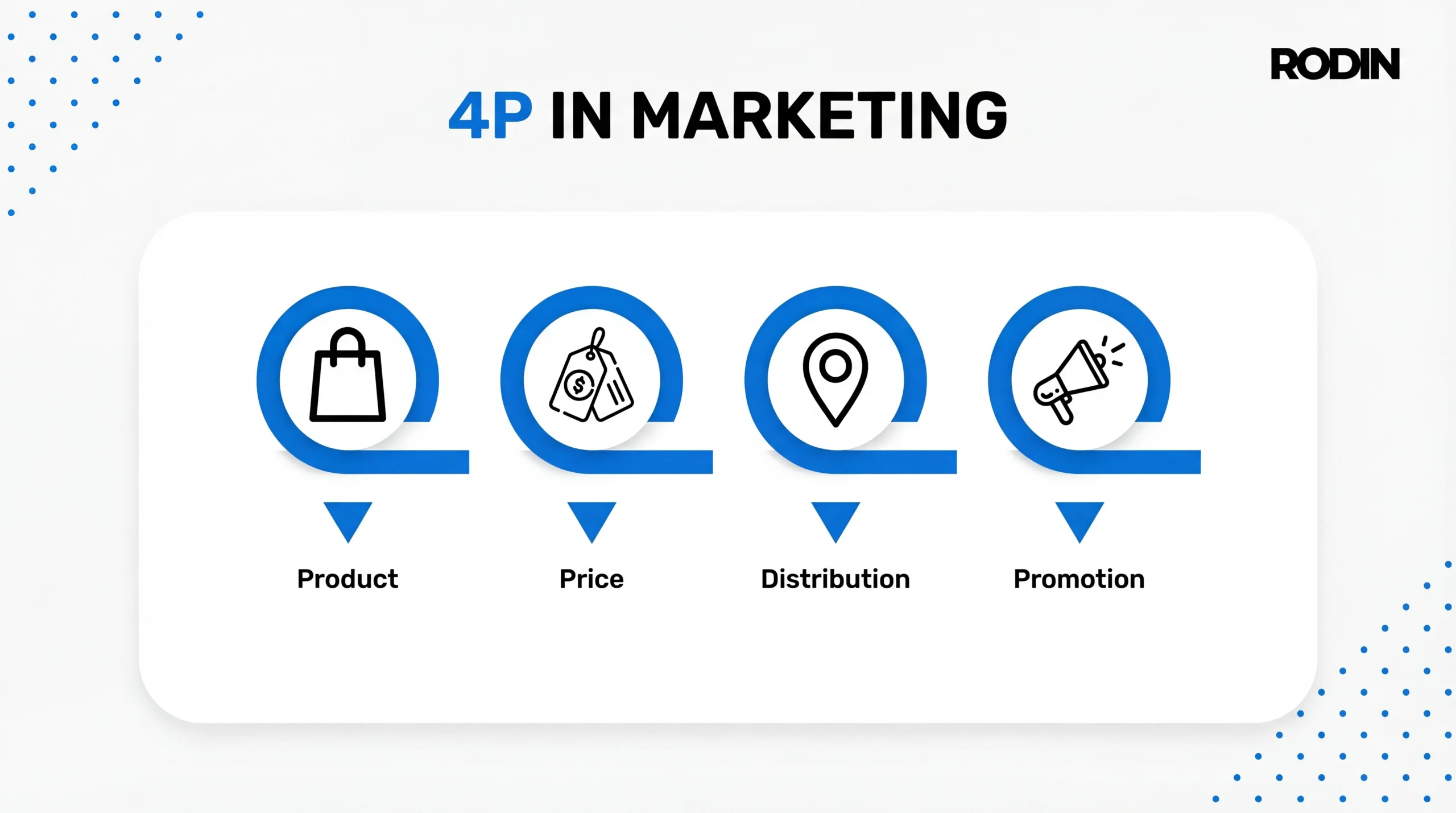
The marketing mix 4P in business
The marketing mix is a strategic combination of decisions and actions related to product, price, distribution, and promotion. Together, these elements allow a company to communicate effectively with the market. When planning a marketing mix, businesses must consider both products and services to meet market expectations.
The concept of marketing mix (product, price, place, promotion) supports companies in acquiring customers, satisfying their needs, and achieving marketing goals. It is one of the foundations of marketing planning and management because it helps organizations adapt their offer to specific market conditions.
Marketing instruments within a marketing strategy
The choice of marketing instruments depends on many factors, including the industry, marketing objectives, target audience, available budget, and the nature of the product or service being offered.
However, several tools are commonly used because of their effectiveness and versatility.
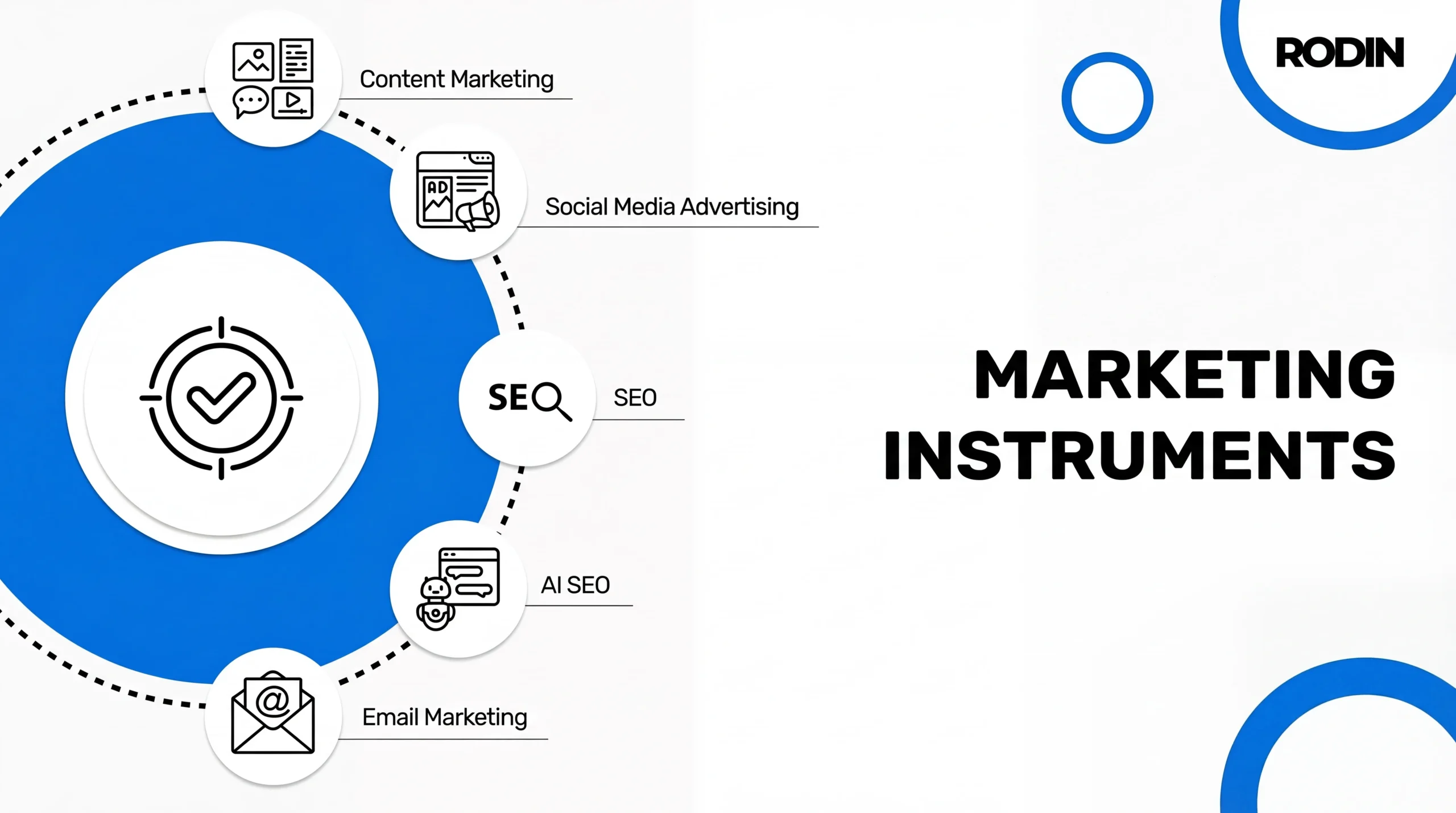
Social media advertising
Today, maintaining a presence on social media is essential. Platforms such as Facebook, Instagram, Twitter, and LinkedIn play a major role in building relationships with customers, running advertising campaigns, and increasing brand awareness. The choice of platform depends largely on the company’s field of activity. Facebook remains one of the most widely used platforms for advertising, but it may not be the best option for every business.
For brands targeting younger audiences, TikTok can be a more effective promotional channel. LinkedIn, on the other hand, is particularly valuable for companies operating in the B2B sector.
One of the main advantages of social media advertising is access to extensive audience data. Another benefit is the possibility of viral reach. If users find the content engaging or valuable, they may share it voluntarily, expanding the campaign’s reach.
Content marketing
Content marketing focuses on creating and sharing valuable, engaging materials that attract users’ attention. The more useful and interesting the content is, the more effective it becomes.
High-quality content should provide value to the audience, answer questions, and address real customer needs. Personalizing content can significantly increase engagement and strengthen loyalty toward a brand, as tailored experiences resonate more strongly with users.
Content can take many forms, including articles, e-books, guides, and infographics.
Customer relationship management plays a key role in content marketing. Well-planned content strategies help build trust, shape a positive brand image, and position a company as a reliable source of knowledge.
SEO
Search engine optimization, commonly known as SEO, is one of the most powerful tools in digital marketing.
SEO activities include selecting relevant keywords and working toward higher positions in search engine results. When done correctly, SEO allows companies to reach a wide audience of potential customers.
It is important to remember that SEO alone rarely delivers long-term results without a solid content marketing strategy. High-quality content that provides real value encourages visitors to stay on the website and increases organic traffic.
With the right approach, SEO can generate a steady flow of potential clients at relatively low cost.
AI SEO
In recent years, SEO has increasingly evolved toward AI-driven search optimization. Appearing in systems such as Google AI Overviews is becoming just as important as ranking in traditional organic search results. Specialists must adapt their strategies to new formats where AI generates answers by analyzing multiple sources.
As a result, companies need to think not only about traditional search rankings but also about how their content is interpreted and summarized by AI systems.
Email Marketing
For companies that already have a developed mailing list, email marketing can be an extremely effective strategy. It allows businesses to pursue various goals, such as increasing sales, maintaining direct communication with customers, strengthening loyalty, and promoting new products or services.
Modern email marketing tools make it possible to segment subscriber lists, personalize messages, and deliver relevant content to specific groups of recipients. Examples include platforms like GetResponse, MailChimp, and Constant Contact.
Marketing mix as a form of communication
The marketing mix is not only a planning and management tool. It also plays a significant role in communication. In practice, it represents the way a company communicates with the market and with its customers.
By analyzing the elements of the marketing mix, businesses can better understand the potential of their product and plan actions that align with real market needs.
The 4P Concept in the Marketing Mix
According to the classic 4P model, marketing consists of four main elements: product, price, place, and promotion.
Each of these components plays a specific role in the marketing strategy.
- Product (customer value)
A product is not limited to a physical item. It also includes services, customer value, and the needs that the offering satisfies. A product may therefore be a handbag, a car, toothpaste, a cosmetic treatment, a psychotherapy session, or even a home renovation service. When analyzing a product, companies consider quality, brand, packaging, consumer perception, and the product life cycle.
- Price (cost)
Price refers to the amount customers must pay for a product or service. Determining the price requires considering demand, production and distribution costs, and competitor pricing. Pricing strategy affects not only customer purchase decisions but also the company’s profitability.
- Place (distribution)
Distribution concerns the location and method through which the product is made available to customers. It includes planning supply chains, selecting distribution channels, and determining the location of sales points.
- Promotion (communication)
Promotion refers to activities that support product sales by providing information about the offer and influencing customer purchasing decisions. This may include social media campaigns, various forms of advertising, and other promotional activities.
The 7P model in the marketing mix
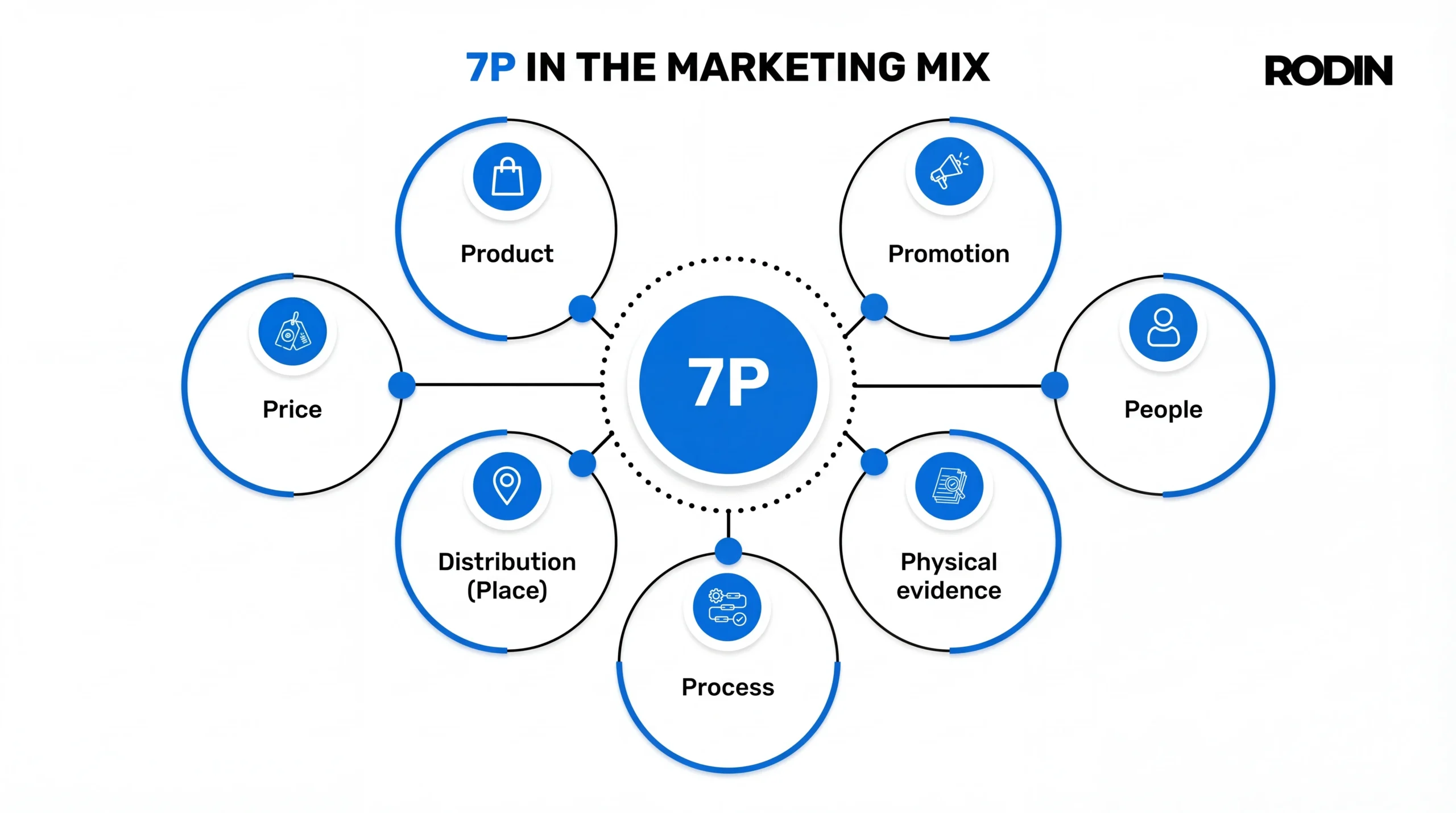
The 7P model expands the traditional marketing mix by adding three additional elements: people, physical evidence, and process.
- People – People are often considered the most important element of the marketing mix. Without customers, sales would not exist.
- Physical evidence – Physical evidence refers to elements that influence the perception of a company and its offerings. These include brand reputation, visual identity, and the quality of services provided.
- Process – Process includes all activities undertaken by a company to deliver products or services to customers. Efficient processes can help businesses gain a competitive advantage.
Direct communication with customers
Direct communication is one of the most important marketing tools because it allows companies to build authentic and personalized relationships with customers. Through direct communication, businesses can present information about their products or services in a way that reflects the expectations and needs of specific audiences.
In today’s highly competitive environment, the ability to communicate directly with customers has become a crucial part of any marketing strategy.
Direct communication may include various channels, from traditional phone conversations and in-person meetings to modern digital platforms such as social media. These activities not only present an offer but also build trust and long-term loyalty among customers.
Regular and personalized contact helps companies understand their audiences more clearly, which leads to more effective marketing efforts and improved sales results.
Tools and examples of effective direct communication
Modern marketing offers companies a wide range of tools that enable efficient direct communication with customers.
One of the most commonly used methods is email marketing, which allows companies to send personalized messages, inform customers about new products, promotions, or special offers, and adapt communication to individual preferences.
Phone calls are also highly effective because they allow companies to respond immediately to customer questions and build trust through direct interaction.
Personal meetings remain important as well, since they allow businesses to present products or services in detail and tailor the conversation to the client’s expectations.
Social media platforms are becoming increasingly important for direct communication. They enable companies to interact with customers, answer questions quickly, and build engaged communities around their brand.
A good example of direct communication in practice is an email campaign where the company segments its audience and sends different messages based on recipients’ interests. Another example is active engagement on social media, where a brand maintains conversations with customers and responds to their needs.
When used properly, direct communication tools help businesses increase sales while strengthening long-term customer relationships.
Choosing the right marketing instruments
Selecting the right marketing instruments is the foundation of an effective strategy. Understanding the available tools makes it easier to adapt an offer to customer expectations.
Marketing is a continuous process that requires adapting to changing market conditions, which is why choosing the right instruments requires careful analysis and planning.
How to choose marketing instruments
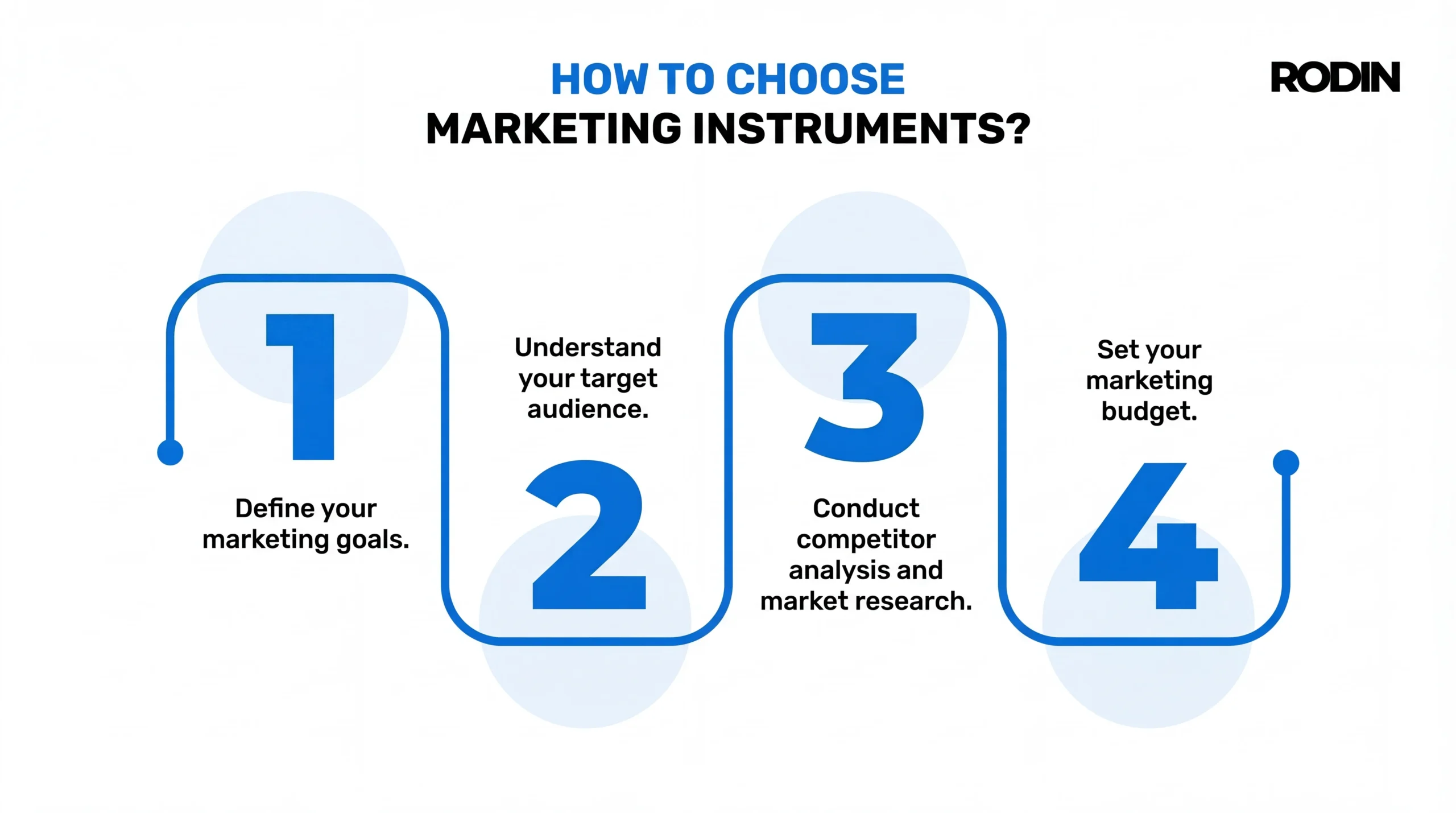
Before selecting specific tools, companies should take several important steps:
- Define the marketing goals they want to achieve.
- Understand their target audience.
- Conduct market research and competitor analysis.
- Determine the available marketing budget.
Completing these steps provides valuable insights into which marketing tools will best match the characteristics of the product or service, the industry, and the target market.
Use marketing tools with Rodin
The most effective marketing strategies combine several communication tools. At Rodin, we know how to make them work together.
Our team consists of experienced specialists who know which marketing tools deliver the best results. This allows us to provide comprehensive solutions tailored to your company.
We work by carefully analyzing the needs and goals of our clients. As a result, every strategy we develop is personalized and aligned with real business objectives. Our specialists also use advanced marketing tools and analytics to optimize campaigns and monitor performance.
Get in touch with us and see how we can support your marketing strategy.
Frequently Asked Questions
The most common types of marketing tools include email marketing tools, social media management tools, SEO tools, marketing automation platforms, and marketing analytics tools. These digital marketing tools help marketing teams manage campaigns, track website traffic, and analyze customer engagement.
Tools such as Google Analytics and other analytics tools provide insights into user behavior and campaign performance, helping businesses optimize their marketing strategy and reach the right target audience.
Marketing tools help companies reach their target audience, track customer engagement, and improve digital marketing campaigns. For example, lead capture tools and email marketing tools help generate leads and nurture potential customers.
Tools used in search engine optimization, search engine marketing, and social media marketing also help increase website traffic and build brand awareness.
Customer relationship management (CRM) systems help businesses collect and organize customer data, track interactions, and analyze customer preferences. Common CRM tools allow marketing departments to personalize communication, improve customer satisfaction, and foster brand loyalty while supporting both marketing and sales teams.
Marketing automation tools help companies automate repetitive tasks such as email campaigns, lead nurturing, and campaign management.
By automating repetitive tasks, marketing teams can focus on strategy, content creation, and optimizing marketing efforts instead of manual processes.
Businesses often use social media marketing tools and social media management tools to schedule social media posting, manage multiple accounts, and track social media campaigns.
These tools also support social media graphics creation, scheduling tools, and social media strategy planning, helping brands maintain consistent communication with their audience.
SEO tools help businesses improve search engine optimization by supporting keyword research, tracking rankings, and analyzing competitors.
Combined with content marketing and marketing analytics tools, they help increase website traffic, generate leads, and improve the effectiveness of digital marketing campaigns.
Marketing analytics tools help businesses analyze market data, track campaign performance, and understand user behavior. Platforms such as Google Analytics provide actionable insights that help marketing managers optimize strategies and make better decisions about future marketing campaigns.
Choosing the right marketing tools depends on business objectives, available budget, and the needs of marketing departments.
Many companies combine CRM systems, project management tools, communication tools, marketing automation platforms, and content management systems to manage campaigns, improve team management, and support effective marketing and sales collaboration..