
A networking event or business conference can be a powerful growth lever—or a complete waste of time. The difference rarely comes down to luck or personality. It comes down to preparation, strategy, and understanding what business networking is really about.
Most people attend events hoping something “just happens.” The professionals who get results know that effective networking starts long before the event itself and continues well after it ends. Below is a practical guide on how to prepare for a networking event, build genuine interest, and turn conversations into real business opportunities.
Preparation is the foundation of effective networking
Showing up unprepared and trying to sell on the spot is one of the biggest mistakes in networking. A networking event is not a checkout line—it’s closer to a first date. Trust, interest, and context matter.
When preparing for a networking event, it’s important to get to the point by being concise and clear in your interactions. Quickly establishing your value helps maintain interest and makes your conversations more effective.
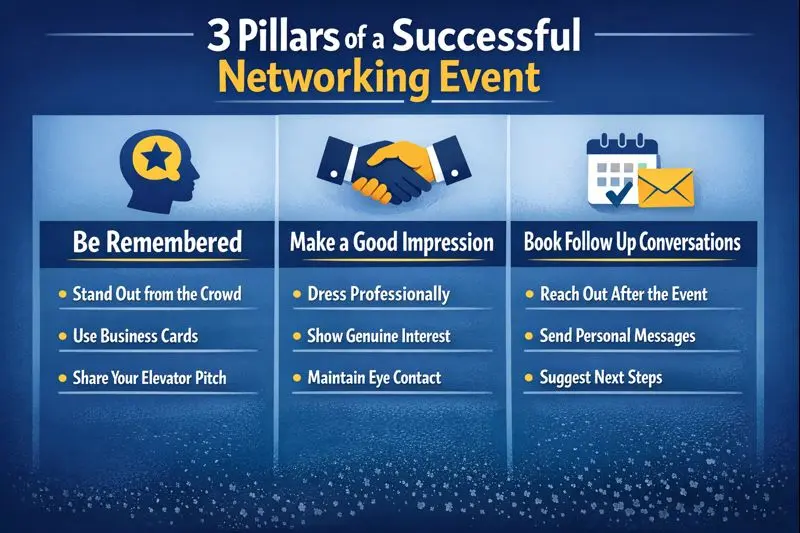
In B2B business especially, deals rarely close during the entire event. The real goal is to:
- Be remembered
- Make a good impression
- Book follow up conversations
Strong networking efforts focus on quality over quantity. Meeting fewer people—but having meaningful conversations—creates a much stronger foundation for long-term relationships.

How to prepare?
Research the event and the attendees
Preparation starts with research. Review the event website, agenda, and attendee list if available. Look for:
- Other attendees you want to connect with
- Companies from your industry or complementary industries
- Exhibitors, partners, and even competitors
Research attendees using event apps or LinkedIn to identify key individuals or companies you want to connect with.
Many events also have LinkedIn groups or pages. Joining early allows you to connect with people before the event, making in-person conversations far more natural.
When preparing your name tag, be sure to include your company name and your role. This helps facilitate connections and promotes your professional credibility.
Aim for specific people, not everyone
Trying to talk to most people in the room rarely works. Identify a clear target group. Knowing who you want to meet helps you focus your conversations and increases the value of every interaction.
Targeting specific people is especially important for those in a job search, as it helps you find relevant job leads and make meaningful connections. Networking events can be valuable for advancing your job search and preparing for job-related conversations.
This approach is especially effective for professionals in sales, marketing, business development, and small businesses looking to grow through partnerships.
Create value before the event begins
One of the most overlooked networking strategies is giving before asking.
Instead of sending generic messages, create something genuinely useful and connected to the event:
- A simple conference guide
- A networking checklist
- A practical PDF with schedules, venues, or tips
When you share value first, you naturally open the door to conversation. This approach dramatically increases engagement and often leads to pre-booked meetings during the event itself.
By providing value ahead of time, you hope to build stronger relationships and increase engagement with other attendees.
Bring business cards and use them intentionally

Yes, you should still bring business cards.
Business cards make exchanging contact info effortless and professional. Always:
- Bring business cards with clear details
- Exchange them after a good conversation
- Take a moment to look at the card you receive
These small habits signal respect and help people remember you after the event. Bring business cards, but don’t treat them like flyers—use them as a follow-up tool.

Master the elevator pitch (without sounding like self promotion)
An elevator pitch should feel like the start of a discussion, not a sales script.
A strong elevator pitch:
- Clearly states your first and last name
- Explains what you do in simple terms
- Invites questions and interest
When preparing your elevator pitch, focus on speaking clearly and confidently—this helps establish a strong connection and ensures your message is understood.
Practice until it sounds natural. Confidence comes from clarity, not exaggeration. The best advice here is simple: aim to be understood, not impressive.
How to handle conversations during a networking event
Show genuine interest
People can sense when you’re waiting for your turn to talk. Ask thoughtful questions, listen carefully, and respond with genuine interest. This alone separates you from most attendees.
Good conversation builds trust faster than perfect wording.
Use eye contact and be present
Maintaining eye contact keeps the interaction focused and human. Avoid scanning the room or checking your phone during conversations. Presence is a key signal of professionalism and respect.
Schedule conversations whenever possible
The best conversations rarely happen randomly at a coffee stand between sessions. Pre-booked meetings create space for deeper discussion and stronger connections.
Treat the event as a reason to bring people together—not as the place where all the work happens.

Follow up: where business networking really pays off
Follow up is where networking either succeeds or fails.
Within a few days after the event:
- Send a short, personalized message
- Reference a specific conversation or idea
- Suggest a next step (call, meeting, or coffee)
Consistent follow up turns brief interactions into real professional relationships. Without it, even great conversations fade quickly.
Think long-term, not just about the next event
Networking is not about closing deals at one event. It’s about building a professional community over time.
For a small company, regular attendance at networking events is especially important to reinforce your presence and build trust within your industry.
When you focus on relationships, helpful conversations, and consistent follow up, each event becomes easier and more effective than the last. The results compound—often in ways you don’t expect.
Final thoughts
A networking event rewards those who prepare, give value, and focus on genuine human connection. Success doesn’t come from standing at a booth or pitching everyone in the room. It comes from the work you do before stepping into the venue—and the follow up you do afterward.
Dressing in business casual attire, such as dress pants or khakis with a button-down shirt, can help you feel more confident and approachable at networking events.
If you want to deepen your skills in business networking, communication, and professional growth, explore more articles on our blog and keep building connections that actually matter.