

AI Audit
Our clients
What do you gain from an AI audit?

A clear picture of how AI describes your brand
You’ll see exactly how AI models like ChatGPT, Gemini, Claude, or Perplexity present your company, offer, and expertise to users. This audit reveals what algorithms know about you, what they overlook, and where they get things wrong.

Identification of gaps, errors, and potential risks
We pinpoint inaccuracies, missing information, and weak signals that may cause AI systems to misrepresent your business. Fixing these issues helps prevent lost trust and missed opportunities caused by incorrect AI-generated answers.

A full view of your visibility in AI recommendation systems
We assess how visible your brand is across modern AI tools and recommendation engines. You’ll learn where you already appear and where targeted improvements can significantly increase your chances of being recommended.
What do you gain from an AI audit?

A clear picture of how AI describes your brand
You’ll see exactly how AI models like ChatGPT, Gemini, Claude, or Perplexity present your company, offer, and expertise to users. This audit reveals what algorithms know about you, what they overlook, and where they get things wrong.

Identification of gaps, errors, and potential risks
We pinpoint inaccuracies, missing information, and weak signals that may cause AI systems to misrepresent your business. Fixing these issues helps prevent lost trust and missed opportunities caused by incorrect AI-generated answers.

A full view of your visibility in AI recommendation systems
We assess how visible your brand is across modern AI tools and recommendation engines. You’ll learn where you already appear and where targeted improvements can significantly increase your chances of being recommended.
Start your AI audit
Share a few details about your company, and we’ll evaluate how AI systems interpret and recommend your brand.
How does it work in practice?
We’ve designed a transparent AI audit process that shows how AI models see your brand and what you can do to improve that position.
-
How AI presents your company -
Visibility in AI Overviews and recommendation systems -
Errors, gaps, and potential threats -
Actionable report with a clear strategy -
Review of results and next steps
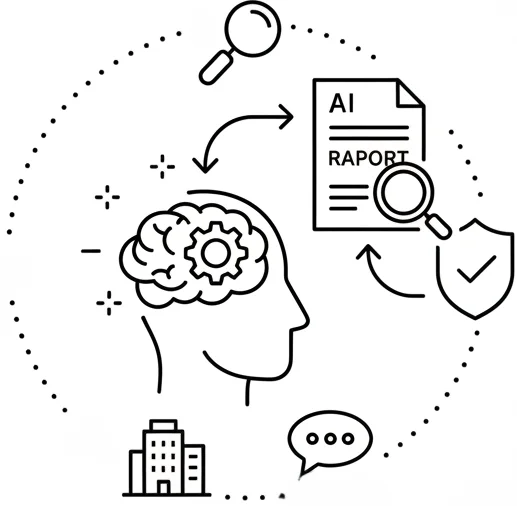
The audit examines how tools such as ChatGPT, Gemini, Claude, Perplexity, Copilot, and other artificial intelligence systems describe your brand, services, and values. This step often reveals differences between how a company intends to be perceived and how algorithms actually present it.
Instead of looking at single answers, the analysis covers entire datasets and recurring patterns, making it possible to assess AI performance, data quality, and potential biases affecting recommendations.
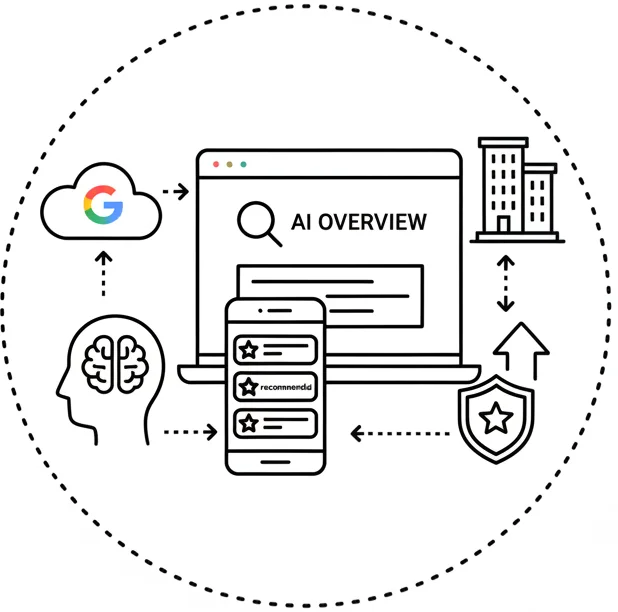
This stage focuses on whether and how a brand appears in Google AI Overviews and other recommendation systems. It highlights visibility gaps, missing signals, and areas where competitors are referenced more consistently.
By reviewing data sources, structure, and access controls, the audit helps identify factors that influence accuracy, relevance, and consistency in AI-generated responses.
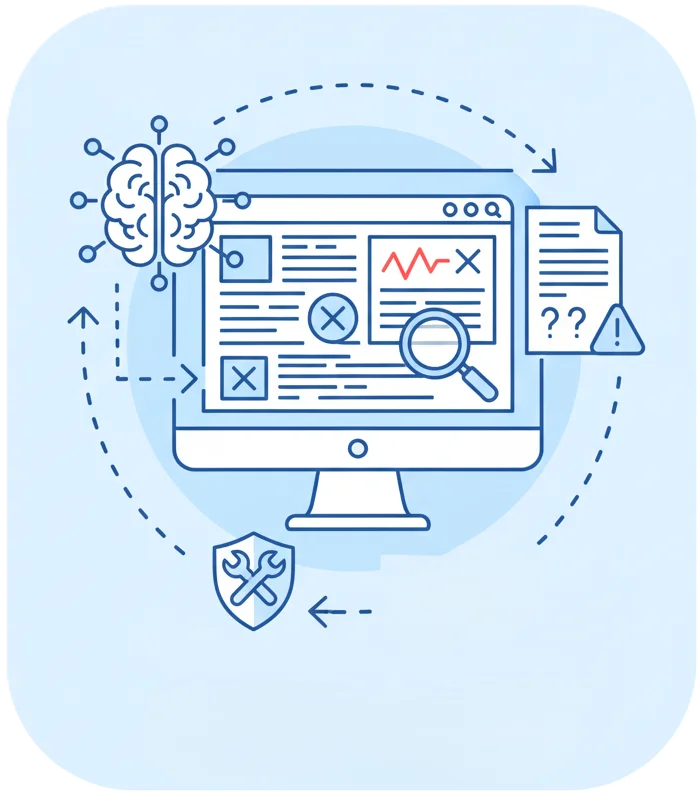
The audit identifies misleading information, omissions, and risks related to how AI systems interpret content, data, and documentation. These issues often stem from outdated materials, inconsistent data entry, or unclear positioning.
Addressing them supports risk management efforts and reduces the chance of credibility loss, compliance issues, or unintended reputational damage caused by AI-generated outputs.
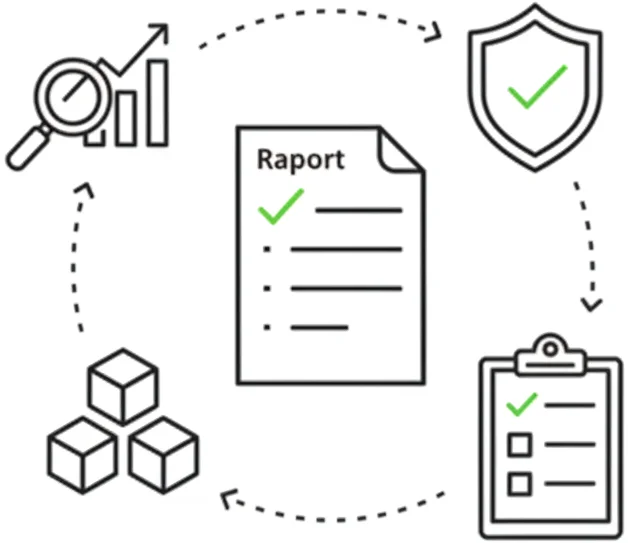
The outcome is a clear report containing audit findings, priorities, and actionable recommendations aligned with established best practices. Each recommendation directly links to specific issues discovered during the audit process.
This structure supports informed decision making and helps organizations strengthen transparency, accountability, and long-term AI readiness.
The final stage focuses on interpreting the audit results and identifying actions with the highest impact. It explains how AI systems reach conclusions and which factors most strongly influence recommendations.
Based on these insights, the next steps may include AI positioning, regular audits, or further optimization aimed at responsible AI use and sustainable business growth.

The audit examines how tools such as ChatGPT, Gemini, Claude, Perplexity, Copilot, and other artificial intelligence systems describe your brand, services, and values. This step often reveals differences between how a company intends to be perceived and how algorithms actually present it.
Instead of looking at single answers, the analysis covers entire datasets and recurring patterns, making it possible to assess AI performance, data quality, and potential biases affecting recommendations.
This stage focuses on whether and how a brand appears in Google AI Overviews and other recommendation systems. It highlights visibility gaps, missing signals, and areas where competitors are referenced more consistently.
By reviewing data sources, structure, and access controls, the audit helps identify factors that influence accuracy, relevance, and consistency in AI-generated responses.
The audit identifies misleading information, omissions, and risks related to how AI systems interpret content, data, and documentation. These issues often stem from outdated materials, inconsistent data entry, or unclear positioning.
Addressing them supports risk management efforts and reduces the chance of credibility loss, compliance issues, or unintended reputational damage caused by AI-generated outputs.
The outcome is a clear report containing audit findings, priorities, and actionable recommendations aligned with established best practices. Each recommendation directly links to specific issues discovered during the audit process.
This structure supports informed decision making and helps organizations strengthen transparency, accountability, and long-term AI readiness.
The final stage focuses on interpreting the audit results and identifying actions with the highest impact. It explains how AI systems reach conclusions and which factors most strongly influence recommendations.
Based on these insights, the next steps may include AI positioning, regular audits, or further optimization aimed at responsible AI use and sustainable business growth.
Who benefits from an AI audit?
AI audits are designed for any business that wants to understand how AI tools present its brand and how to turn that knowledge into a competitive advantage.

Online businesses

B2B brands

Organizations implementing AI

Companies operating in highly competitive markets
CHOOSE THE RIGHT PACKAGE FOR YOUR BUSINESS
AI Audit Pricing
Pricing depends on the size of your website, the scope of analysis, and the number of AI tools and models included in the audit.
AI Starter Audit
A fast assessment of your brand’s presence in the most popular AI models.
Includes:
Analysis of basic queries in ChatGPT and Gemini.
Review of how AI describes your company.
Identification of key gaps.
Short report with recommendations.
Starting from 120 €
Extended AI Audit
A full verification of your visibility across AI tools.
Includes:
Analysis of major models (ChatGPT, Gemini, Claude, Perplexity).
Competitive comparison.
Identification of errors, inconsistencies, and risks.
Recommendations for improving content and company data.
Detailed report with action priorities.
Starting from 230 €
Strategic AI Audit
An advanced audit covering content, data, branding, and automation potential.
Includes:
Analysis of advanced query scenarios.
Visibility review in Google AI Overviews.
In-depth risk and error analysis.
Strategic and business-level recommendations.
Extended report and results consultation.
Starting from 580 €
NEXT STEPS
Building visibility in AI tools
An audit shows where you are. AI positioning takes you further.
After the audit, you can move straight into actions that increase your visibility across AI platforms.
Optimization of content and company data for generative queries.
Improving presence in leading AI tools.
Creating and refining query scenarios (prompts + AI-ready FAQs).
Ongoing monitoring and adjustments.
Strategic consulting and implementation support.
Why work with Rodin?

Experts who understand both AI models and real users
We work at the intersection of data, algorithms, and user behavior. We know how AI systems interpret brands, content, and signals and, just as importantly, what actually influences their recommendations.
This allows us to propose actions that make sense not only for algorithms, but for your business and your customers.

Clear results and full transparency
You receive a clear, well-structured report with priorities, explanations, and concrete next steps. We show what we do, why it matters, and in what order actions should be taken without hiding behind technical jargon or vague promises.
Everything is explained in plain language, so you can make informed decisions with confidence.

End-to-end support, not just a report
Our work doesn’t stop at delivering an audit. If you want, we can also support implementation, from improving content and company data to executing a full AI visibility and positioning strategy.
That way, insights turn into real outcomes, not documents that sit on a shelf.
Why work with Rodin?

Experts who understand both AI models and real users
We work at the intersection of data, algorithms, and user behavior. We know how AI systems interpret brands, content, and signals and, just as importantly, what actually influences their recommendations.
This allows us to propose actions that make sense not only for algorithms, but for your business and your customers.

Clear results and full transparency
You receive a clear, well-structured report with priorities, explanations, and concrete next steps. We show what we do, why it matters, and in what order actions should be taken without hiding behind technical jargon or vague promises.
Everything is explained in plain language, so you can make informed decisions with confidence.

End-to-end support, not just a report
Our work doesn’t stop at delivering an audit. If you want, we can also support implementation, from improving content and company data to executing a full AI visibility and positioning strategy.
That way, insights turn into real outcomes, not documents that sit on a shelf.
Schedule a consultation
Fill out the form and schedule a meeting with our marketing expert.
Frequently Asked Questions – AI Audit
The first step is simple: you fill out a short form and send an inquiry. Based on that information, we assess which AI systems should be included in the audit process and what level of analysis makes sense for your business.
If you want to go deeper, we can also schedule a short consultation. This allows us to understand your AI use, regulatory requirements, and decision making process before defining the scope of the audit.
An AI audit shows how artificial intelligence systems interpret your data, content, and business operations. It reveals how algorithms describe your brand, where potential issues appear, and how AI performance affects accuracy, fairness, and transparency.
More importantly, the audit delivers actionable recommendations. You gain clear insights into data quality, potential biases, and areas where governance structures or human oversight should be strengthened to support responsible AI use.
Yes. As part of the analysis, we compare your audit results with companies that are most frequently referenced or favored by AI systems in similar contexts.
This comparison helps identify where competitors outperform you in terms of data structure, content clarity, or explainability. It also supports better prioritization of improvements and more confident resource allocation.
The final report documents all audit findings in a clear and structured way. It includes identified risks, potential issues, and explanations of how AI systems process and interpret your data.
You also receive practical recommendations covering risk management, compliance, data collection practices, and improvements aligned with best practices and ethical standards. The documentation is designed to support both strategic decisions and operational changes.
Yes. The audit process is aligned with current regulatory standards and regulatory requirements, including the AI Act. We evaluate compliance, access controls, data governance, and accountability mechanisms.
We also explain where additional safeguards may be required to mitigate risks, improve transparency, and ensure AI is used responsibly within your organization.
Yes. We work exclusively with publicly available information and data sources you intentionally provide. We do not interfere with internal systems, production environments, or live code.
This approach protects data integrity, reduces security risks, and ensures the audit focuses on analysis, not system intrusion or data entry.
An AI audit is critical for organizations that rely on artificial intelligence for operations, reporting, accounting, analytics, or decision support.
It is especially valuable for businesses operating in regulated environments, companies scaling AI use, and teams that want confidence in accuracy, fairness, and long-term compliance.
AI systems can analyze entire datasets and detect patterns using advanced analytics and predictive analytics, but professional judgment remains essential.
Internal auditors, analysts, and decision-makers provide context, ethical considerations, and accountability that algorithms alone cannot replace. Human oversight ensures AI supports business success rather than introducing hidden risks.
All audit findings are documented in a clear, structured report. It covers identified risks, potential issues, and explanations of how AI systems process, interpret, and combine information about your business.
The documentation also includes practical recommendations aligned with best practices, ethical standards, and risk management frameworks, making the results usable beyond theory.
Absolutely. Many organizations rely on artificial intelligence in financial reporting, analytics, and operational decision support.
An AI audit helps reduce risks related to data accuracy, manual errors, and undocumented logic, which is especially important in regulated industries and compliance-driven environments.
Yes. The audit process is designed with regulatory requirements in mind, including the AI Act and related standards.
It reviews access controls, data governance, accountability mechanisms, and areas where additional safeguards may be needed to mitigate risks and support AI responsibly across operations.