









Consent Mode Implementation
Our clients
Send an inquiry
Would you like to see how Consent Mode could work for your business?
Contact us.
What do you gain from implementing Consent Mode?

More complete data despite limited consent
With proper Consent Mode Implementation, you can recover up to 20–40% of user data that would otherwise be lost. This provides a more accurate view of customer behavior and campaign effectiveness.

Secure and compliant setup
We configure Google Consent Mode v2 in line with data protection regulations, including GDPR and the Digital Markets Act. Data collection respects user consent preferences and follows transparent compliance standards.

More accurate conversion tracking
Google Ads and Google Analytics can model missing signals more effectively. This improves your ability to evaluate marketing performance using reliable measurement data.

Lower customer acquisition costs
More precise data enables better optimization. When Google tags receive accurate consent signals, campaigns perform more efficiently and budgets are not wasted on incomplete tracking.

Improved Google Ads performance
When direct tracking is limited due to consent restrictions, Advanced Consent Mode enables data modeling that restores missing signals. This allows campaigns to optimize correctly and maintain stable performance even with reduced user consent.

Competitive advantage
Many companies still fail to implement Google Consent Mode properly or delay the process entirely. Correct implementation gives you cleaner data, stronger optimization, and better results at a lower cost.
What do you gain from implementing Consent Mode?

More complete data despite limited consent
With proper Consent Mode Implementation, you can recover up to 20–40% of user data that would otherwise be lost. This provides a more accurate view of customer behavior and campaign effectiveness.

Secure and compliant setup
We configure Google Consent Mode v2 in line with data protection regulations, including GDPR and the Digital Markets Act. Data collection respects user consent preferences and follows transparent compliance standards.

More accurate conversion tracking
Google Ads and Google Analytics can model missing signals more effectively. This improves your ability to evaluate marketing performance using reliable measurement data.

Lower customer acquisition costs
More precise data enables better optimization. When Google tags receive accurate consent signals, campaigns perform more efficiently and budgets are not wasted on incomplete tracking.

Improved Google Ads performance
When direct tracking is limited due to consent restrictions, Advanced Consent Mode enables data modeling that restores missing signals. This allows campaigns to optimize correctly and maintain stable performance even with reduced user consent.

Competitive advantage
Many companies still fail to implement Google Consent Mode properly or delay the process entirely. Correct implementation gives you cleaner data, stronger optimization, and better results at a lower cost.
How does Consent Mode work in practice?
Consent Mode acts as a bridge between your website and Google services.
-
Audit of Your Current Setup -
Implementation Strategy -
Implementation and Testing -
Verification and Implementation Report
We analyze your existing Google Tag Manager configuration, Google tags, consent banner, consent management platform, and integrations. We verify consent checks, default consent state, default consent commands, and whether consent settings are configured correctly.
We also assess how consent signals are passed between your consent management platform and Google Tag Manager, whether tags fire before consent is established, and whether any tracking scripts bypass the intended consent logic. This allows us to identify data gaps, compliance risks, and structural issues that could affect measurement accuracy or campaign performance.
We design a structured Consent Mode Implementation tailored to your website technology, tagging structure, marketing goals, and legal requirements. This includes defining default consent settings, configuring consent initialization, and preparing proper consent commands.
Our strategy ensures that Consent Mode is not implemented as a standalone technical fix, but as part of a coherent measurement framework. We align consent logic with your conversion tracking, remarketing setup, analytics structure, and regional compliance requirements. This guarantees consistent data flow, scalable configuration, and long-term stability as your marketing stack evolves.
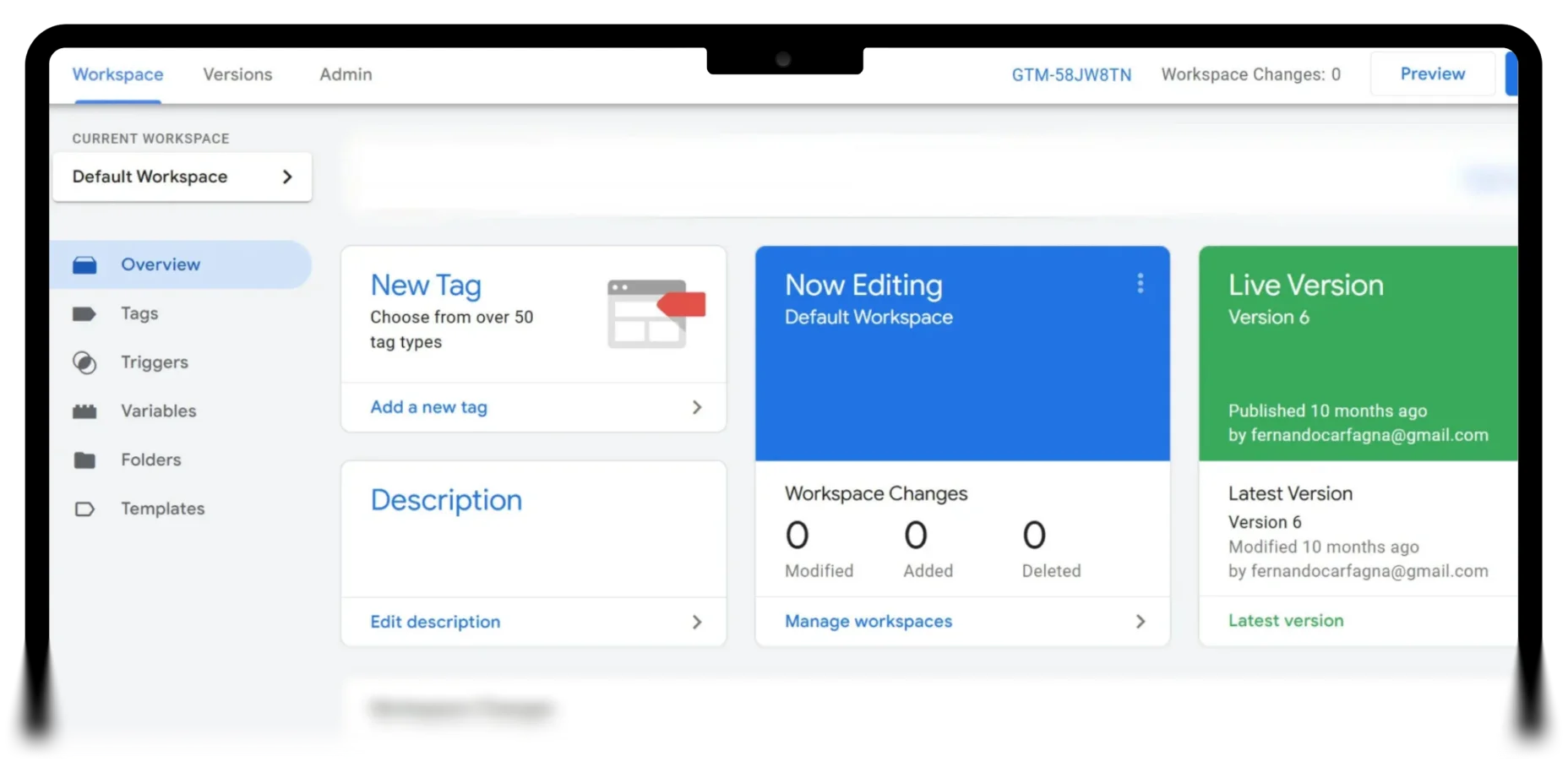
We implement Google Consent Mode v2 within Google Tag Manager. This includes:
configuring consent commands and default consent logic,
defining consent state and consent signals,
adjusting tag behavior and built-in consent checks,
validating conversion linker tag configuration,
verifying that Google tags load correctly,
testing network requests in the browser’s developer tools.
We also verify how the system reacts when a user interacts with the consent banner, denies consent, or grants consent.
After implementation, you receive a detailed report explaining:
how the Consent Mode API is configured,
how user consent status affects data collection,
how Google tags send measurement data,
how data modeling restores missing conversion signals,
what data is collected on the same page and same domain.
All information is presented clearly and without unnecessary technical complexity.
We analyze your existing Google Tag Manager configuration, Google tags, consent banner, consent management platform, and integrations. We verify consent checks, default consent state, default consent commands, and whether consent settings are configured correctly.
We also assess how consent signals are passed between your consent management platform and Google Tag Manager, whether tags fire before consent is established, and whether any tracking scripts bypass the intended consent logic. This allows us to identify data gaps, compliance risks, and structural issues that could affect measurement accuracy or campaign performance.
We design a structured Consent Mode Implementation tailored to your website technology, tagging structure, marketing goals, and legal requirements. This includes defining default consent settings, configuring consent initialization, and preparing proper consent commands.
Our strategy ensures that Consent Mode is not implemented as a standalone technical fix, but as part of a coherent measurement framework. We align consent logic with your conversion tracking, remarketing setup, analytics structure, and regional compliance requirements. This guarantees consistent data flow, scalable configuration, and long-term stability as your marketing stack evolves.
We implement Google Consent Mode v2 within Google Tag Manager. This includes:
configuring consent commands and default consent logic,
defining consent state and consent signals,
adjusting tag behavior and built-in consent checks,
validating conversion linker tag configuration,
verifying that Google tags load correctly,
testing network requests in the browser’s developer tools.
We also verify how the system reacts when a user interacts with the consent banner, denies consent, or grants consent.
After implementation, you receive a detailed report explaining:
how the Consent Mode API is configured,
how user consent status affects data collection,
how Google tags send measurement data,
how data modeling restores missing conversion signals,
what data is collected on the same page and same domain.
All information is presented clearly and without unnecessary technical complexity.
Which companies should implement Consent Mode?

E-commerce
businesses
If you sell products and invest in Google Ads, failing to implement Consent Mode can limit conversion tracking and remarketing. This directly affects return on investment and personalized advertising performance.
B2B companies running lead campaigns
If you generate leads through Google Ads and Google Analytics, Advanced Consent Mode allows conversion tracking even when user consent is partially granted. Data modeling helps maintain consistent measurement data.

Companies with advanced
analytics
If you rely on GA4 events, key events, funnels, and cross-domain tracking, managing consent mode correctly protects your measurement structure and ensures compliant data collection.
Why Implement Consent Mode with Rodin?
-
Implemented in line with official Google documentation from day one -
Ongoing support, not just code delivery -
End-to-end process from audit to testing -
Fast delivery in 1–2 weeks
We follow official Google documentation and technical requirements. Our consent code configurations comply with Google consent types, consent mode v2 requirements, and consent management standards.
You receive full documentation covering consent settings, consent state configuration, default consent commands, and consent checks. If Google updates its framework or your consent management platform changes, we adjust your setup accordingly.
We do not send a script and ask you to paste it into your website. Instead, we conduct a full audit of your tag manager configuration, configure Google Tag Manager properly, test network requests and query parameters, verify consent signals and tag behavior, and confirm accurate conversion tracking. Only after full verification do we publish the implementation.
Standard Consent Mode Implementation including audit, configuration, testing, and publication takes approximately one to two weeks. If your tagging structure is organized and access to GTM and CMP is immediate, the timeline can be shortened.
We follow official Google documentation and technical requirements. Our consent code configurations comply with Google consent types, consent mode v2 requirements, and consent management standards.
You receive full documentation covering consent settings, consent state configuration, default consent commands, and consent checks. If Google updates its framework or your consent management platform changes, we adjust your setup accordingly.
We do not send a script and ask you to paste it into your website. Instead, we conduct a full audit of your tag manager configuration, configure Google Tag Manager properly, test network requests and query parameters, verify consent signals and tag behavior, and confirm accurate conversion tracking. Only after full verification do we publish the implementation.
Standard Consent Mode Implementation including audit, configuration, testing, and publication takes approximately one to two weeks. If your tagging structure is organized and access to GTM and CMP is immediate, the timeline can be shortened.
Schedule a consultation
Fill out the form and schedule a meeting with our marketing expert.
Frequently Asked Questions
Google typically does not suspend accounts immediately. However, without proper Consent Mode Implementation, conversion tracking, remarketing, and personalized advertising may be restricted.
This leads to incomplete measurement data and weaker campaign optimization. Improper cookie consent implementation may also expose your company to data protection risks.
No. A cookie banner is only the visual layer. Google Consent Mode v2 is the technical mechanism that communicates user consent status to Google tags, Google Analytics, and Google Ads.
Without properly implementing consent mode, Google tags may collect data as if consent were granted, which may conflict with data privacy regulations.
Pricing depends on website complexity, number of Google tags, consent management platform configuration, and whether Advanced Consent Mode is required. Multi-domain setups or region-specific logic (e.g., US-CA denied) require additional configuration.
Standard implementation including audit, configuration, testing, and publication takes one to two weeks. Structured tagging and immediate access to Google Tag Manager and your consent management platform can reduce the timeline.
Simply share your website URL and we will verify your setup within minutes. If Google Tag Manager is not implemented, we can install and configure it as part of the project.
Google Consent Mode v2 works natively with Google Analytics, Google Ads, Floodlight, and other Google services. Other advertising platforms such as Meta, LinkedIn, and TikTok require separate consent configurations, which can be implemented alongside Google Consent Mode.
From the user perspective, only consent transparency improves. The website functions normally. The difference lies in how consent signals control data collected and conversion tracking behind the scenes.
Basic Consent Mode blocks Google tags when consent is denied. Advanced Consent Mode enables data modeling to reconstruct anonymous data and maintain measurement continuity even when users deny consent.
Yes. Incorrect implementation may lead to inaccurate conversion tracking, broken remarketing, improper consent state configuration, and potential violations of data protection regulations. Proper consent management protects user privacy while maintaining campaign performance.
Yes. When consent mode works correctly, Google Ads can model missing conversions and optimize campaigns more effectively. You gain more complete measurement data while maintaining compliance with user privacy requirements.